Why Managing Carbon Footprint Is Becoming a Business Imperative
Introduction
The global business landscape is currently undergoing a profound transformation as environmental sustainability moves from a corporate responsibility initiative to a core strategic priority. Among the various sustainability challenges confronting organizations today, carbon footprint management has emerged as one of the most critical. Consequently, governments, investors, customers, and regulatory authorities increasingly expect businesses to measure, report, and reduce their greenhouse gas emissions.
Historically, carbon reduction efforts were often viewed as voluntary environmental commitments designed primarily to enhance corporate reputation. However, rising climate concerns, stricter regulations, evolving investor expectations, and growing consumer awareness have fundamentally altered this perception. Today, carbon footprint management is becoming a business imperative that directly influences operational efficiency, market competitiveness, risk management, and long-term profitability.
Organizations across industries are now recognizing that sustainability and business performance are no longer separate objectives. Instead, effective carbon management is increasingly becoming a key driver of resilience, innovation, and future growth.
Understanding Corporate Carbon Footprints
A carbon footprint represents the total amount of greenhouse gases generated directly and indirectly by an organization’s operations, products, and services. These emissions are typically measured in carbon dioxide equivalent ($\text{CO}_2\text{e}$) and are categorized into three major areas.
-
Scope 1 Emissions: These originate from sources directly owned or controlled by the company, such as manufacturing facilities, company vehicles, and industrial processes.
-
Scope 2 Emissions: These result from purchased electricity, heating, cooling, or steam consumed by the organization.
-
Scope 3 Emissions: These encompass indirect emissions across the broader value chain, including suppliers, transportation, product usage, employee travel, and end-of-life disposal.
For many businesses, Scope 3 emissions represent the largest portion of their carbon footprint. Therefore, comprehensive carbon management remains a complex but essential undertaking for modern enterprises.
Regulatory Pressure Driving Corporate Action
Governments worldwide are introducing increasingly stringent environmental regulations aimed at reducing greenhouse gas emissions and achieving national climate goals. Furthermore, carbon disclosure requirements, emissions reporting frameworks, carbon pricing mechanisms, and sustainability compliance standards are rapidly becoming mandatory across many jurisdictions.
Because of these shifting policies, organizations that fail to address carbon management risk facing regulatory penalties, increased compliance costs, and operational restrictions. As environmental regulations continue to evolve, businesses must proactively establish carbon accounting systems and emissions reduction strategies to remain compliant.
Fortunately, forward-thinking companies are no longer waiting for regulations to force action. Instead, they are integrating sustainability into corporate planning to stay ahead of future policy developments and minimize regulatory risks.
Investor Expectations Reshaping Corporate Priorities
Environmental, Social, and Governance (ESG) considerations have become a major factor influencing investment decisions globally. Similarly, institutional investors, asset managers, and financial institutions increasingly evaluate companies based on their sustainability performance, including carbon reduction commitments.
Investors recognize that climate-related risks can significantly impact long-term financial performance. For example, companies with high carbon exposure may face increased operational costs, supply chain disruptions, reputational challenges, and reduced market opportunities.
As a result, organizations that demonstrate clear carbon management strategies often gain improved access to capital, stronger investor confidence, and enhanced valuation prospects. Transparent emissions reporting and measurable sustainability goals are thus becoming essential components of corporate governance and financial credibility.
Customer Demand Accelerating Sustainability Adoption
Consumer preferences are evolving rapidly in favor of environmentally responsible products and services. Customers increasingly seek to support brands that align with their values and demonstrate genuine commitments to sustainability.
By actively reducing their carbon footprint, businesses can strengthen brand loyalty, improve customer trust, and differentiate themselves in highly competitive markets. Sustainability credentials are now influencing purchasing decisions across sectors ranging from retail and manufacturing to technology and transportation.
Corporate customers are also placing greater emphasis on supplier sustainability performance. Indeed, large organizations frequently require suppliers to disclose emissions data and demonstrate carbon reduction initiatives as part of procurement processes. This trend is creating sustainability-driven supply chains where carbon performance directly affects business opportunities.
Operational Efficiency Through Carbon Reduction
One of the most compelling reasons for carbon footprint management is its direct connection to operational efficiency. In fact, many carbon reduction initiatives simultaneously lower operating costs and improve resource utilization.
Energy-efficient buildings, optimized manufacturing processes, renewable energy adoption, smart logistics systems, and waste reduction programs often generate significant financial savings while reducing emissions.
Moreover, advanced technologies such as Artificial Intelligence (AI), Internet of Things (IoT) sensors, predictive analytics, and energy management platforms enable organizations to identify inefficiencies and optimize resource consumption in real time. By reducing energy use, minimizing waste, and improving process efficiency, businesses can strengthen profitability while achieving sustainability objectives.
Supply Chain Sustainability Becoming Essential
Modern supply chains are increasingly vulnerable to environmental risks, regulatory changes, and climate-related disruptions. Extreme weather events, resource shortages, and transportation challenges can significantly affect business continuity and operational performance.
Organizations are therefore extending carbon management efforts beyond their own facilities to encompass suppliers, logistics networks, and distribution systems. Therefore, supply chain transparency has become critical for understanding emissions sources and identifying opportunities for improvement.
Businesses are increasingly collaborating with suppliers to implement sustainable practices, reduce transportation emissions, and improve resource efficiency throughout the value chain. Consequently, these efforts not only support emissions reduction goals but also strengthen supply chain resilience and long-term operational stability.
Technology Enabling Smarter Carbon Management
Digital transformation is playing a crucial role in helping businesses manage carbon footprints more effectively. Modern sustainability platforms provide organizations with real-time visibility into emissions performance, energy consumption, and environmental impact.
Carbon accounting software can automatically collect data from multiple operational systems, enabling accurate emissions measurement and reporting. Additionally, advanced analytics help organizations identify high-emission activities and prioritize reduction initiatives based on potential impact.
Artificial Intelligence further enhances decision-making by forecasting emissions trends, optimizing resource allocation, and supporting predictive sustainability planning. As technology capabilities continue to evolve, businesses are gaining powerful tools to integrate sustainability into everyday operations and strategic planning.
Competitive Advantage Through Sustainability Leadership
Organizations that proactively address carbon management often gain significant competitive advantages. Sustainability leadership can strengthen corporate reputation, attract environmentally conscious customers, improve employee engagement, and create new business opportunities.
Many companies are developing low-carbon products, sustainable services, and innovative business models that address emerging market demands. Subsequently, these initiatives not only contribute to emissions reduction but also open new revenue streams and growth opportunities.
Furthermore, employees increasingly prefer working for organizations that demonstrate strong environmental values. Effective sustainability programs can improve talent attraction, employee retention, and organizational culture. In an increasingly sustainability-focused economy, carbon management is becoming a key differentiator that influences stakeholder perceptions and market positioning.
The Future of Carbon-Conscious Business Operations
The future of business will be defined by an organization’s ability to balance economic performance with environmental responsibility. Net-zero commitments, science-based emissions targets, renewable energy investments, and sustainable innovation are becoming standard components of long-term corporate strategies.
Emerging technologies such as carbon capture, green hydrogen, advanced battery systems, and circular economy solutions will further expand opportunities for emissions reduction. At the same time, global climate policies are expected to become more ambitious, increasing the importance of proactive sustainability planning.
Organizations that establish strong carbon management frameworks today will be better positioned to adapt to future market conditions, regulatory requirements, and stakeholder expectations.
The Strategic Outlook
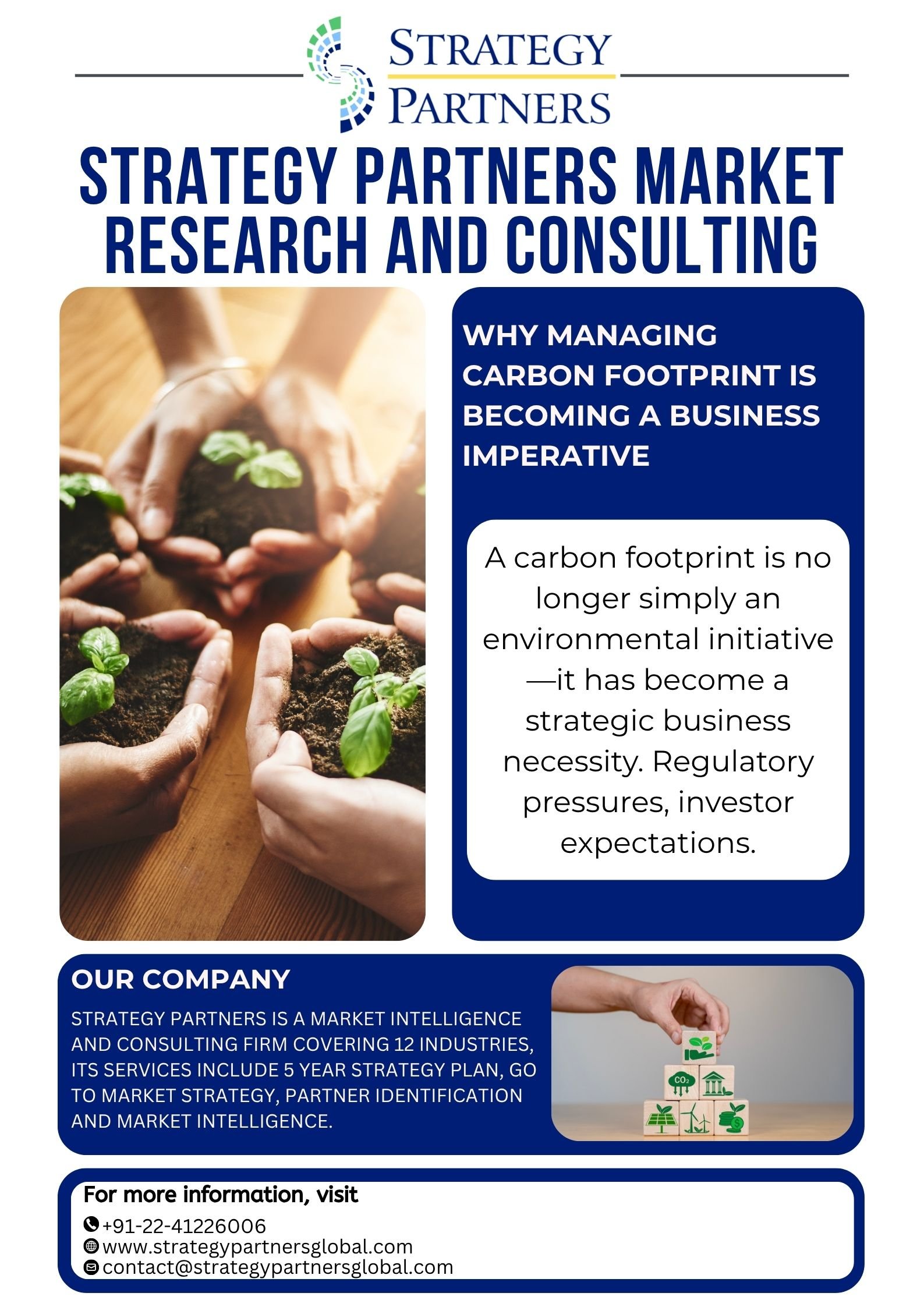
In conclusion, managing a carbon footprint is no longer simply an environmental initiative—it has become a strategic business necessity. Regulatory pressures, investor expectations, customer preferences, operational efficiency goals, and supply chain resilience are all driving organizations toward comprehensive carbon management practices.
Businesses that embrace sustainability as a core operational principle can unlock significant benefits, including cost savings, improved competitiveness, enhanced stakeholder trust, and long-term growth opportunities. Conversely, organizations that fail to address carbon-related risks may face increasing financial, regulatory, and reputational challenges.
As the global economy transitions toward a lower-carbon future, effective carbon footprint management will increasingly determine which companies thrive, adapt, and lead in the decades ahead.