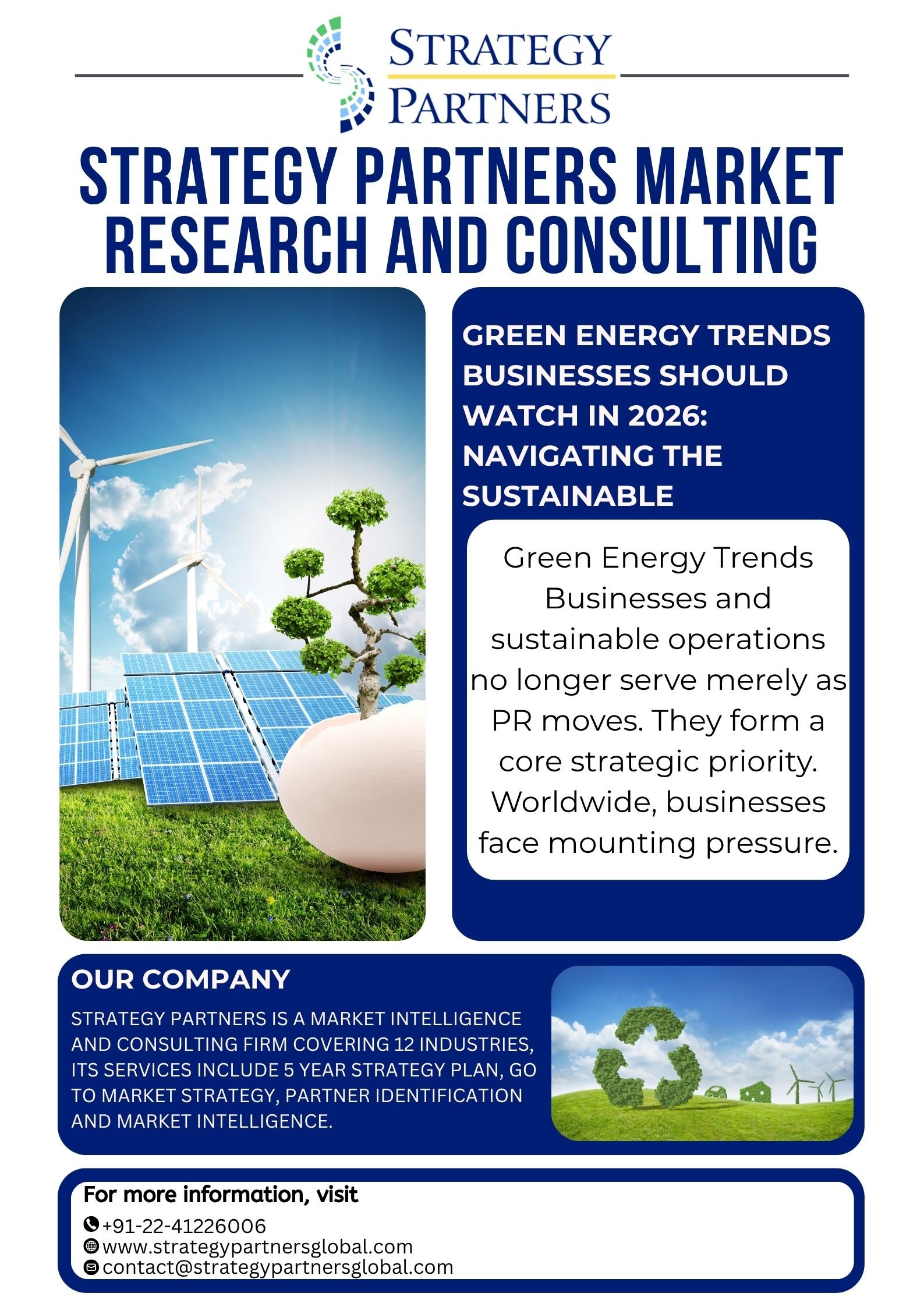
Green Energy Trends Businesses Should Watch in 2026: Navigating the Sustainable Future
Green Energy Trends Businesses and sustainable operations no longer serve merely as PR moves. They form a core strategic priority. Worldwide, businesses face mounting pressure. They must adapt to a world where environmental impact, resilient supply chains, and secure resources link together tightly.
Rapid tech advances, strict eco-rules, and shifting global politics drive this massive transformation. As detailed in the document Blogs_08.05.2026.docx, market analyses point to three major trends. Forward-thinking organizations must focus on EV battery recycling, AI-driven demand planning, and shifting global trade routes. Here is a deep dive into the green energy trends you must watch.
1. The Circular Economy Takes Center Stage: Closing the Loop on EV Batteries
The global auto industry rapidly continues its adoption of electric vehicles (EVs). This shift heavily drives the demand for lithium-ion batteries. Consumers, governments, and car makers now demand sustainable mobility. Consequently, leaders focus intensely on battery lifecycle management. The Electric Vehicle Battery Recycling Market now forms an essential part of the circular economy.
Advancing Recycling Technology
In the past, companies easily recycled lead-acid batteries. However, lithium-ion recycling seemed too complex and unprofitable. Today, advanced technologies flip the script. Facilities deploy new methods to boost material recovery and slash environmental impact. For example, hydrometallurgical processes recover high-purity metals. They also produce fewer emissions than older thermal methods. Researchers also test direct recycling to save energy and protect cathode structures.
Securing the Supply Chain
The EV value chain strongly emphasizes “closing the loop.” Recyclers extract highly valuable materials and feed them straight back into battery factories. These recovered materials include:
-
Lithium
-
Cobalt
-
Nickel
-
Graphite
This smart loop slashes the industry’s need for raw, virgin materials. It also acts as a shield. It cuts dependence on foreign minerals and strengthens supply chain resilience.
Second-Life Innovations
Businesses should also track innovations that stretch battery life. Many used EV batteries still hold significant power. Companies repurpose them for “second-life” jobs, such as:
-
Stationary energy storage
-
Renewable grid support
-
Backup power systems
Furthermore, battery designers plan to improve modularity. They want batteries that pull apart easily for recycling. Expect localized recycling hubs to pop up soon, backed by new laws and battery passport rules.
2. AI-Driven Demand Forecasting: The Engine for Carbon Reduction
Artificial intelligence transforms almost every sector today. Its role in demand forecasting powerfully supports green energy goals in retail and manufacturing. In the past, managers guessed future needs using old sales data and manual spreadsheets. These static tools failed during market swings. Now, machine learning and predictive analytics change the game. They crunch massive data sets in real time to spot exact demand patterns.
Slashing Waste with AI
This tech shift revolutionizes corporate sustainability. Planners design future forecasting systems around green goals. AI helps organizations stop waste, optimize resources, and cut carbon emissions. It directly eliminates the overproduction and poor logistics that harm the planet.
Building Smart Factories
Manufacturers link AI forecasting directly to smart factories and industrial IoT. AI instantly adjusts production schedules based on fresh demand signals. This stops factory waste and prevents dead inventory.
Soon, autonomous supply chains might run themselves. AI could buy materials, allocate inventory, and schedule factory floors with zero human help. By matching supply perfectly to demand, companies save energy and fuel. AI acts as a silent, powerful climate hero.
3. Geopolitics and the Energy Transition Reshaping Global Trade
The green energy shift changes more than the environment. It rewrites the map of global trade. Historically, navies monitored global trade routes to protect fossil fuels. Tomorrow, the energy transition will dictate the safety and path of global shipping.
The Race for Green Minerals
Dumping fossil fuels requires massive new mineral supplies. Global spending on green hydrogen, renewables, and critical minerals alters classic trade routes. Surging demand for rare earth elements, nickel, cobalt, and lithium sparks fierce geopolitical competition. Nations now race to lock down new, strategic trade alliances.
Securing Supply Against Shocks
Geopolitical tensions, border disputes, and sanctions disrupt these new trade routes. These threats force businesses to rethink how they buy materials. Tariffs and export controls push companies away from single-country suppliers.
To survive, firms build diverse supply chains. They use nearshoring and friend-shoring to bring manufacturing closer to home. Governments also spend heavily on alternative transit corridors and domestic factories to secure vital green resources.
Conclusion
The year 2026 stands as a crossroads for sustainable business. The booming EV battery recycling market proves a vital point. A circular economy protects the planet, makes money, and secures critical minerals. At the same time, AI-driven demand forecasting gives manufacturers a sharp tool to slash emissions and eliminate waste. Finally, the global race for green minerals forces a total redesign of international trade.
To stay ahead, businesses must actively embrace these trends. Leaders who fund circular supply chains will win. Those who use AI for green efficiency will dominate. Companies that diversify their sourcing will survive global shocks. These bold organizations will lead the charge into a profitable, sustainable future.