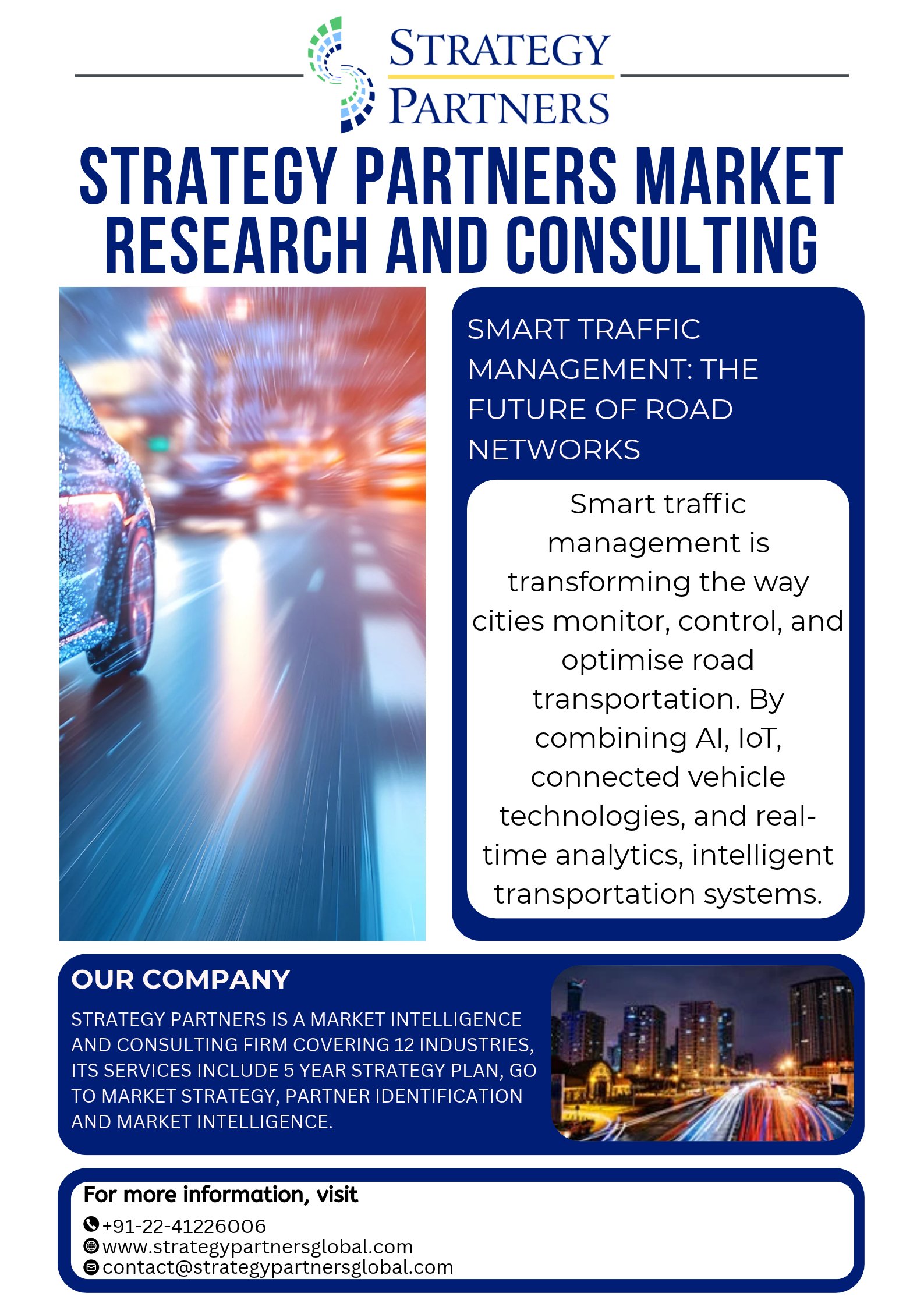
Rapid urbanisation, increasing vehicle ownership, and expanding transportation networks have created significant challenges for cities worldwide. Traffic congestion, road accidents, air pollution, and inefficient transportation systems are affecting urban mobility and economic productivity. Traditional traffic management approaches, which largely depend on fixed traffic signals and manual monitoring, are becoming insufficient to address the growing complexity of modern road networks. Smart traffic management is emerging as an important solution for building safer, more efficient, and sustainable transportation infrastructure.
Smart traffic management uses advanced technologies such as Artificial Intelligence (AI), the Internet of Things (IoT), cloud computing, connected vehicle systems, and real-time data analytics to monitor and control traffic conditions. These technologies enable transportation authorities to collect information from roads, analyse traffic patterns, and make informed decisions to improve vehicle movement.
By integrating intelligent traffic signals, automated monitoring systems, and connected infrastructure, smart traffic management solutions can reduce congestion, improve road safety, and optimise transportation operations. As governments invest in smart cities and digital infrastructure, intelligent traffic management is becoming a key component of next-generation road networks.
How Smart Traffic Management Systems Work
Smart traffic management systems operate through an interconnected network of sensors, cameras, communication devices, and centralised traffic control platforms. These components continuously collect and process information about vehicle movement, road conditions, traffic density, and potential incidents.
Traffic cameras and roadside sensors monitor vehicle volumes, speeds, and congestion levels at important intersections. The collected information is transmitted to traffic management centres, where advanced analytics and AI-based platforms process the data to identify traffic patterns and potential disruptions.
AI-powered traffic control systems can adjust signal timings according to real-time traffic conditions rather than following predetermined schedules. For example, when a particular road experiences heavy vehicle movement, intelligent traffic signals can modify green-light durations to improve traffic flow.
Connected vehicle technologies provide additional information about vehicle locations, speed, and road conditions. When integrated with intelligent transportation infrastructure, these systems can support improved route planning, hazard alerts, and coordinated traffic operations.
Cloud-based platforms further enhance traffic management by enabling authorities to monitor multiple road networks through centralised systems. This allows transportation departments to manage traffic incidents, coordinate emergency responses, and analyse historical traffic data for infrastructure planning.
Key Technologies Transforming Smart Traffic Management
The development of smart traffic management is driven by several emerging technologies that are improving the efficiency and intelligence of modern transportation networks.
Artificial Intelligence and Machine Learning: AI enables traffic management platforms to analyse large volumes of traffic data, identify congestion patterns, and predict potential bottlenecks. Machine learning algorithms can support adaptive traffic signal control, automated incident detection, and dynamic route optimisation.
Internet of Things (IoT): IoT-enabled sensors, cameras, and connected roadside devices provide continuous information about traffic conditions. These devices help transportation authorities monitor vehicle density, road usage, environmental conditions, and infrastructure performance.
Intelligent Traffic Signal Systems: Adaptive traffic signals automatically modify signal timings based on real-time vehicle movement. Unlike conventional traffic lights, these systems respond dynamically to changing traffic volumes, helping reduce unnecessary waiting times at intersections.
Vehicle-to-Everything (V2X) Communication: V2X technology enables communication between vehicles, infrastructure, pedestrians, and other road users. It supports real-time hazard notifications, collision warnings, traffic updates, and coordinated vehicle movement.
Big Data and Cloud Computing: Smart transportation platforms use cloud infrastructure and data analytics to process information collected from multiple sources. These capabilities help authorities understand traffic patterns, forecast demand, and improve transportation planning.
Automated Number Plate Recognition (ANPR): ANPR systems use cameras and image-processing technologies to identify vehicle registration numbers. They support traffic enforcement, electronic toll collection, parking management, and vehicle monitoring.
Applications Across Modern Transportation Networks
Smart traffic management technologies are being deployed across urban highways, commercial transportation corridors, public transit networks, and smart city infrastructure.
In urban areas, intelligent traffic signals help regulate vehicle movement at busy intersections and reduce traffic congestion. Real-time traffic monitoring platforms provide information about road conditions, accidents, and alternative routes, helping drivers make better travel decisions.
On highways, automated incident detection and variable message signs support traffic control and improve road safety. These technologies can alert drivers about accidents, road closures, adverse weather conditions, and speed restrictions.
Smart traffic management also plays an important role in public transportation. By integrating buses, traffic signals, and passenger information systems, transport authorities can improve scheduling, reduce delays, and provide more reliable services.
In commercial transportation and logistics, intelligent traffic platforms help fleet operators identify efficient routes, monitor vehicle movement, and reduce unnecessary fuel consumption. These capabilities are particularly valuable for freight transportation, last-mile delivery, and large-scale distribution networks.
Emergency vehicle prioritisation is another important application. Intelligent traffic signals can support the movement of ambulances, fire engines, and emergency response vehicles by coordinating traffic signals along selected routes.
Benefits and Challenges of Smart Traffic Management
Smart traffic management offers several advantages for governments, transportation authorities, businesses, and road users. One of its primary benefits is improved traffic flow. Real-time monitoring and adaptive signal control help reduce congestion and minimise delays, particularly in high-density urban environments.
Improved road safety is another major advantage. AI-powered cameras, connected vehicle systems, and automated incident detection can help identify dangerous situations and provide timely alerts to drivers and authorities.
These technologies can also contribute to environmental sustainability. Reduced vehicle idling and optimised traffic movement can lower fuel consumption and transportation-related emissions. Furthermore, intelligent traffic management supports better utilisation of existing road infrastructure, potentially reducing the need for costly road expansion projects.
Despite these advantages, implementing smart traffic management systems involves several challenges. High initial investment costs, infrastructure upgrades, and integration with legacy transportation systems can create financial and technical barriers. Cybersecurity and data privacy are also important concerns because connected transportation networks generate and exchange large volumes of information.
Additionally, reliable communication infrastructure and standardised technologies are necessary to ensure seamless connectivity between vehicles, sensors, and traffic control platforms. Governments must also address the digital infrastructure gap between major cities and smaller urban areas.
Future Outlook for Smart Traffic Management
The future of smart traffic management will be closely connected to advancements in autonomous vehicles, artificial intelligence, 5G connectivity, and connected transportation infrastructure. As vehicle-to-everything communication becomes more widespread, road networks will increasingly support real-time information exchange between vehicles and infrastructure.
AI-driven predictive traffic management is expected to become more sophisticated, allowing authorities to anticipate congestion, identify accident-prone locations, and optimise traffic signals before major disruptions occur.
The integration of smart traffic systems with electric vehicle charging infrastructure, public transportation platforms, and smart parking solutions will further strengthen urban mobility. Autonomous vehicles may also benefit from connected road infrastructure that provides information about traffic conditions, road hazards, and available routes.
Governments and city planners are likely to increase investments in intelligent transportation systems as part of broader smart city development programmes. These investments will create opportunities for technology providers, automotive manufacturers, infrastructure developers, and transportation solution companies.
Conclusion
Smart traffic management is transforming the way cities monitor, control, and optimise road transportation. By combining AI, IoT, connected vehicle technologies, and real-time analytics, intelligent transportation systems are helping address growing challenges associated with congestion, road safety, and environmental sustainability.
As digital infrastructure continues to evolve, smart traffic management will become an essential element of future road networks. Its integration with autonomous mobility, electric vehicles, and smart city platforms will contribu