Precision engineering has become a critical foundation of modern manufacturing, enabling industries to produce components and systems with extremely tight tolerances, high repeatability, and consistent quality. From aerospace and defense to automotive, medical devices, electronics, and industrial machinery, manufacturers are increasingly relying on precision technologies to meet demanding performance requirements.
The evolution of precision engineering is being driven by automation, advanced materials, digital technologies, artificial intelligence, and the growing need for efficient and sustainable production. As products become more complex and manufacturing cycles become shorter, companies are investing in technologies that can improve accuracy while reducing waste, production time, and operating costs.
The Growing Importance of Precision Engineering
Modern products require components that can perform reliably under demanding operating conditions. A small dimensional variation in an aerospace component, automotive transmission part, medical implant, or semiconductor component can affect the performance and service life of the final product. Precision engineering addresses these challenges by combining advanced design, machining, measurement, materials, and manufacturing techniques.
The shift toward lightweight structures, miniaturized electronics, electric vehicles, advanced aircraft, and automated machinery is further increasing the demand for precision components. Manufacturers are therefore moving beyond conventional machining and adopting integrated production systems capable of controlling processes at increasingly smaller scales.
Another important factor is customization. Customers increasingly expect products to be tailored to specific applications without significantly increasing production costs. Flexible precision manufacturing systems allow manufacturers to produce complex components in smaller batches while maintaining consistent quality.
Automation and Smart Manufacturing
Automation is one of the most significant trends transforming precision engineering. Computer numerical control machines, robotic systems, automated inspection equipment, and intelligent production lines are reducing dependence on manual intervention while improving consistency.
Modern CNC machining centers can perform complex multi-axis operations with extremely high accuracy. When combined with robotics, automated material handling, and real-time monitoring, these systems can operate continuously while maintaining production quality.
Smart manufacturing is taking automation further by connecting machines, sensors, software, and production management systems. Industrial Internet of Things technologies allow manufacturers to collect data from machines throughout the production process. This information can be analyzed to identify variations, detect equipment problems, and optimize manufacturing parameters.
Predictive maintenance is another important application. Instead of waiting for a machine to fail, manufacturers can monitor vibration, temperature, tool wear, and other operating parameters to identify potential problems. This reduces unexpected downtime and helps maintain consistent production performance.
Artificial Intelligence and Digitalization
Artificial intelligence is increasingly being integrated into precision engineering workflows. AI-based systems can analyze large quantities of manufacturing data to identify patterns that may not be easily detected through conventional methods.
In machining, AI can support tool-wear prediction, process optimization, defect detection, and adaptive control. Machine-learning algorithms can evaluate production data and recommend changes to cutting speeds, feed rates, temperatures, or other parameters to improve productivity and component quality.
Digital twins are also becoming increasingly important. A digital twin creates a virtual representation of a machine, production process, or component. Engineers can use this virtual environment to simulate manufacturing operations, identify potential problems, and optimize processes before physical production begins.
Digital engineering can also improve collaboration between design and manufacturing teams. Design changes can be evaluated digitally, reducing the need for repeated physical prototypes and shortening product development cycles.
Advanced Manufacturing and Additive Technologies
Additive manufacturing is expanding the capabilities of precision engineering by enabling the production of geometrically complex components that may be difficult or impossible to manufacture using traditional processes.
Technologies such as metal additive manufacturing can produce lightweight structures, internal channels, lattice designs, and customized components. Aerospace manufacturers are particularly interested in these capabilities because reducing component weight can improve aircraft efficiency and performance.
Additive manufacturing is also increasingly being combined with conventional machining. A component can be produced using additive processes and then finished through high-precision machining to achieve the required dimensional accuracy and surface quality. This hybrid approach can reduce material waste while maintaining the performance requirements of demanding applications.
Advanced Materials and Micro-Manufacturing
The development of advanced materials is creating new requirements for precision manufacturing. Titanium alloys, nickel-based superalloys, advanced composites, ceramics, and engineered polymers are increasingly used in applications requiring high strength, low weight, thermal resistance, or chemical durability.
These materials can be difficult to machine because of their hardness, heat sensitivity, or complex physical characteristics. Manufacturers are responding with specialized cutting tools, advanced coatings, optimized machining strategies, and improved cooling technologies.
At the same time, miniaturization is creating opportunities for micro-manufacturing. Medical devices, sensors, semiconductor equipment, aerospace electronics, and other high-technology products increasingly require extremely small and accurate components. Micro-machining, precision grinding, laser processing, and advanced inspection technologies are becoming important tools for producing these parts.
Metrology and Quality Control
Precision manufacturing cannot be separated from precision measurement. Advanced metrology technologies are allowing manufacturers to inspect components faster and with greater accuracy.
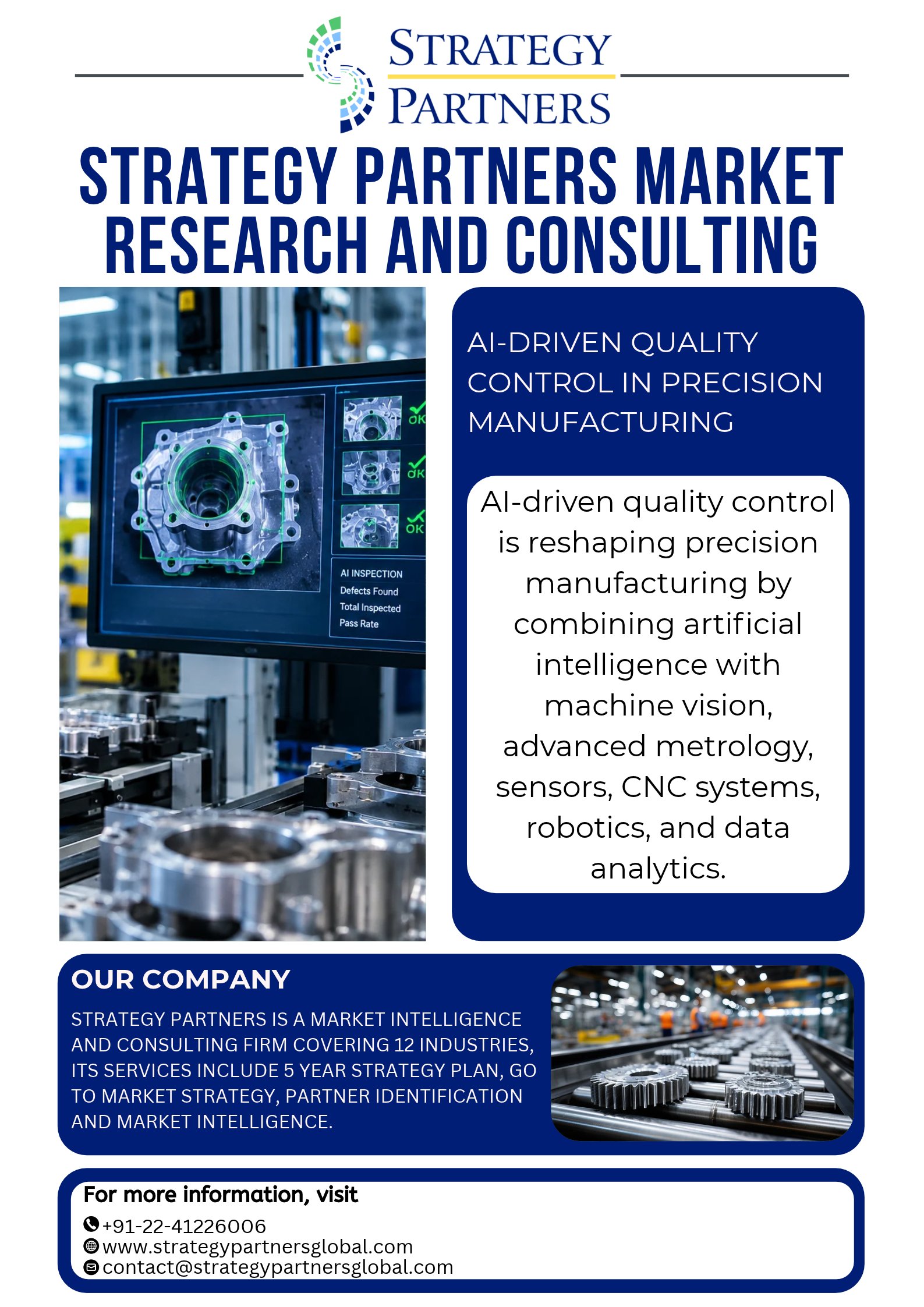
Coordinate measuring machines, optical measurement systems, laser scanners, industrial CT systems, and automated vision inspection are increasingly being incorporated into production environments. These technologies can measure complex geometries and identify dimensional deviations without relying entirely on manual inspection.
In-line inspection is becoming particularly valuable. Instead of checking components only after production, manufacturers can monitor quality during the manufacturing process. This allows deviations to be detected earlier and reduces the amount of defective material produced.
The integration of metrology data with manufacturing systems is also supporting closed-loop manufacturing. Measurement results can be automatically transferred back to machines, allowing production parameters to be adjusted when necessary.
Sustainability and Energy Efficiency
Sustainability is becoming another major influence on precision engineering. Manufacturers are under increasing pressure to reduce material consumption, energy use, emissions, and production waste.
Precision machining can contribute to sustainability by improving material utilization and reducing scrap. Advanced simulation and process optimization can also help manufacturers determine the most efficient production methods before machining begins.
Lightweight component design is another important opportunity. Precision engineering combined with advanced materials and additive manufacturing can create components that use less material while delivering the required structural performance.
Energy-efficient machines, optimized production schedules, smart monitoring, and improved tooling are also helping manufacturers reduce the environmental impact of production.
The Future of Precision Engineering
The future of precision engineering will be shaped by the convergence of physical manufacturing and digital intelligence. Highly automated factories will increasingly combine CNC machines, robots, artificial intelligence, digital twins, advanced sensors, and automated inspection systems into connected production environments.
Manufacturers will also place greater emphasis on flexibility. Instead of designing factories only for high-volume production, companies will increasingly seek systems capable of switching rapidly between products and supporting customized manufacturing.
For aerospace and defense, precision engineering will remain essential as aircraft, propulsion systems, missiles, radar equipment, unmanned platforms, and other defense technologies become more sophisticated. Automotive manufacturers will similarly require precision technologies for electric powertrains, batteries, sensors, autonomous driving systems, and lightweight structures.
The combination of precision engineering and emerging technologies is therefore creating a new manufacturing model focused on accuracy, intelligence, flexibility, and sustainability. Companies that successfully integrate these capabilities can improve product quality, reduce production costs, accelerate development, and respond more effectively to changing market requirements.
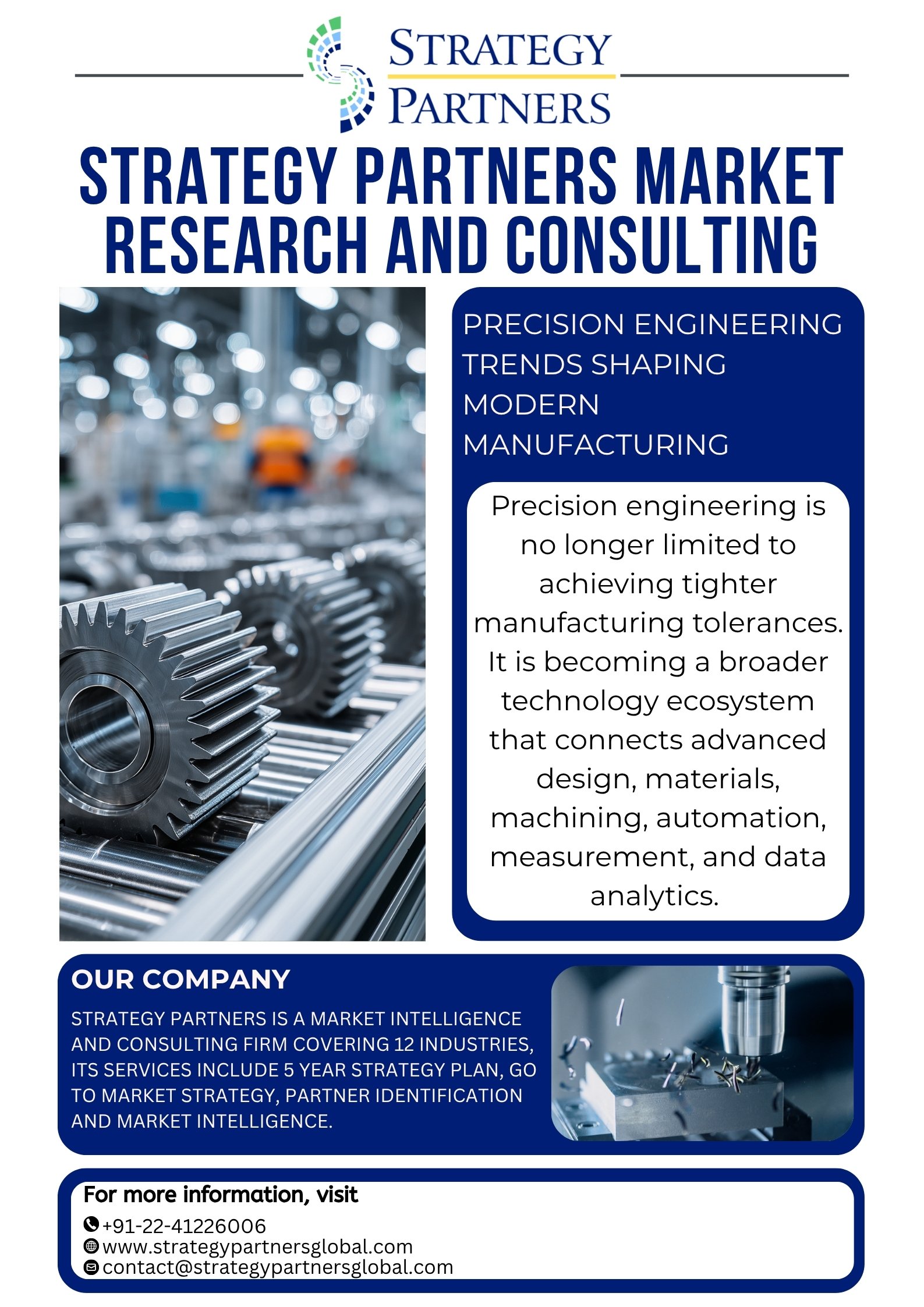
Precision engineering is no longer limited to achieving tighter manufacturing tolerances. It is becoming a broader technology ecosystem that connects advanced design, materials, machining, automation, measurement, and data analytics. As modern manufacturing continues to evolve, precision engineering will remain one of the key technologies enabling the next generation of industrial production.