
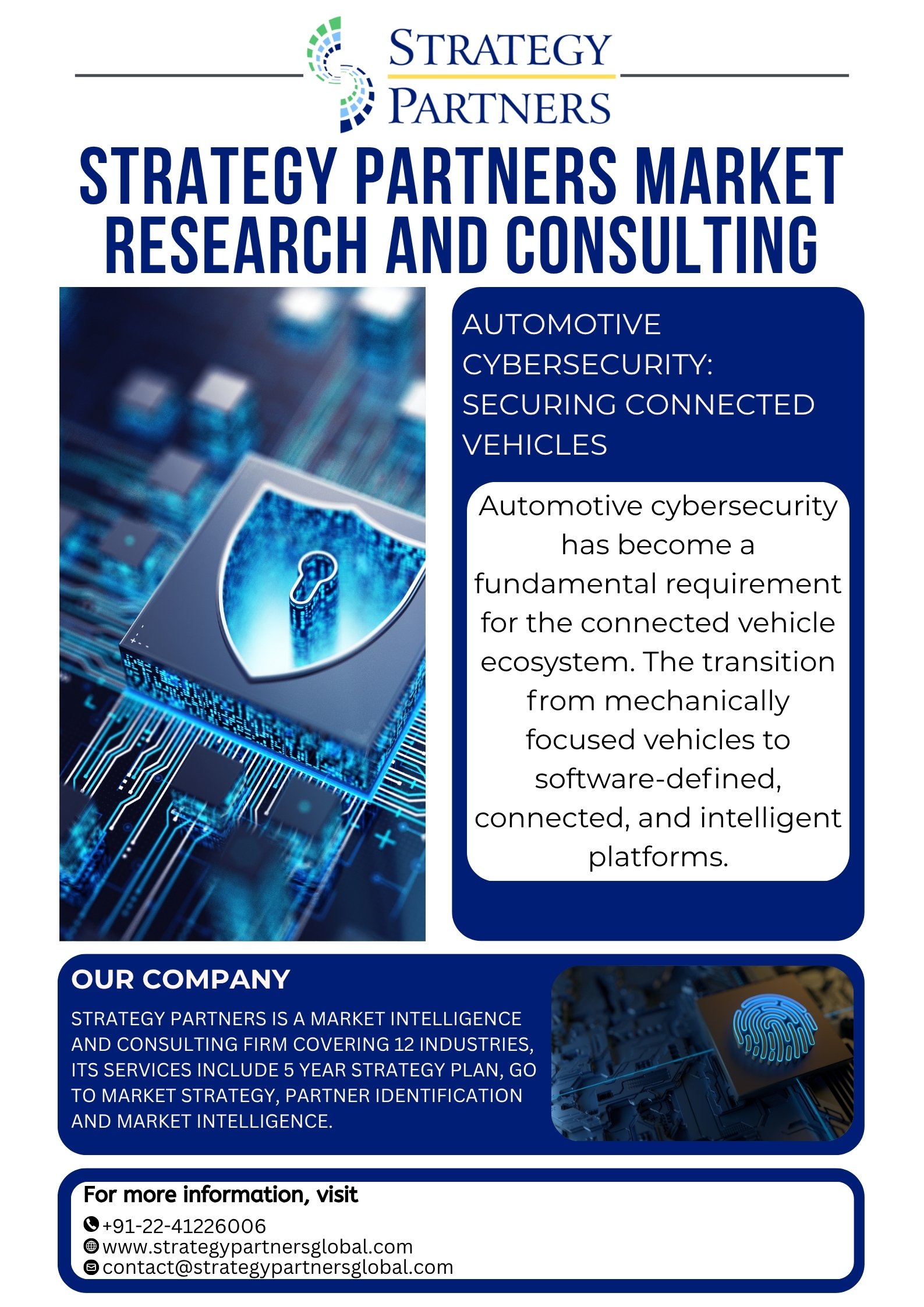
Automotive cybersecurity is moving rapidly toward connected, intelligent, and software-driven vehicles. Modern cars can connect to smartphones, cloud platforms, navigation services, charging networks, and other vehicles. These capabilities improve convenience, safety, and driving performance. However, they also create new cybersecurity risks.
A connected vehicle can contain dozens of electronic control units, sensors, communication interfaces, and software systems. As vehicles become more connected, cyberattacks can potentially target these components. Automotive cybersecurity has therefore become an essential part of vehicle design, manufacturing, and lifecycle management.
The Rise of the Connected Vehicle
Traditional vehicles relied mainly on mechanical systems and limited electronic controls. Modern vehicles are very different. They use advanced computing platforms to manage functions such as braking, steering, infotainment, driver assistance, navigation, battery management, and communications.
Connected vehicles can exchange data through cellular networks, Wi-Fi, Bluetooth, GPS, vehicle-to-everything (V2X) communications, and cloud platforms. Over-the-air software updates can also allow manufacturers to update vehicle functions without requiring a physical service visit.
These technologies create a more capable vehicle ecosystem. At the same time, every additional connection can introduce another potential entry point for cyber threats.
Why Automotive Cybersecurity Matters
Automotive cybersecurity focuses on protecting vehicles, their software, communications, data, and connected infrastructure from unauthorized access or malicious activity.
A successful cyberattack could affect more than personal information. Depending on the vehicle architecture and security controls, attackers could potentially interfere with vehicle functions, compromise connected services, manipulate data, or disrupt fleet operations.
Cybersecurity is particularly important for electric and autonomous vehicles. Electric vehicles rely heavily on software, battery management systems, charging infrastructure, and digital communications. Autonomous vehicles depend on sensors, artificial intelligence, high-performance computing, and real-time data processing.
Protecting these systems is therefore critical for maintaining vehicle safety, operational reliability, consumer trust, and business continuity.
Major Cybersecurity Threats
Connected vehicles face several categories of cybersecurity threats.
Remote Vehicle Attacks
Wireless connectivity can expose vehicles to remote attacks. Vulnerabilities in communication interfaces, connected applications, or cloud services could potentially provide unauthorized access to vehicle systems.
Manufacturers must therefore secure communication channels and carefully control access between external networks and safety-critical systems.
Infotainment and Smartphone Risks
Infotainment systems provide connectivity through Bluetooth, Wi-Fi, smartphones, navigation applications, and online services. If these systems are poorly protected, attackers may attempt to exploit software vulnerabilities or use compromised devices as an entry point.
Separating infotainment functions from critical vehicle systems is an important security strategy.
Malware and Ransomware
Vehicles and automotive organizations can also be targeted by malware. Ransomware attacks against manufacturers, suppliers, dealerships, or fleet operators could disrupt production and business operations.
A cyberattack on an automotive supply chain can have consequences beyond a single organization because modern vehicles depend on thousands of components and software suppliers.
Data and Privacy Threats
Connected vehicles generate significant amounts of information. This may include location information, driving patterns, vehicle diagnostics, user preferences, and information exchanged with connected services.
Protecting this data requires strong access controls, encryption, secure storage, and appropriate data-management practices.
Cybersecurity Across the Vehicle Lifecycle
Automotive cybersecurity cannot be treated as a one-time activity performed before a vehicle reaches the market. Security must be considered throughout the vehicle lifecycle.
During vehicle development, manufacturers can conduct threat assessments and identify vulnerabilities in electronic architectures and software. Security requirements can then be integrated into hardware and software development.
During manufacturing, companies need to protect production systems and ensure that components and software are authentic. Supply-chain security is particularly important because vehicles contain components from numerous suppliers.
After a vehicle enters service, manufacturers need to monitor emerging threats and vulnerabilities. Software updates, security patches, incident response, and continuous monitoring can help address new risks.
This lifecycle approach is becoming increasingly important as vehicles remain connected for many years.
Role of Software and Over-the-Air Updates
Software has become one of the most important elements of automotive cybersecurity. Manufacturers increasingly use centralized vehicle computers and software platforms to manage multiple functions.
Over-the-air updates allow manufacturers to distribute software improvements and security patches remotely. This can significantly reduce the time required to address vulnerabilities.
However, OTA systems themselves must be protected. Manufacturers need secure authentication, encrypted communications, software integrity checks, and mechanisms to prevent unauthorized updates.
A compromised update system could create risks across a large number of vehicles. Therefore, cybersecurity must be integrated into the entire update process.
Artificial Intelligence in Automotive Cybersecurity
Artificial intelligence is becoming an important tool for detecting and responding to cyber threats. AI-based systems can analyze large volumes of vehicle and network data to identify unusual behavior.
For example, cybersecurity platforms can monitor communication patterns and flag activity that differs from normal vehicle behavior. Machine learning can also support anomaly detection and help security teams prioritize potential threats.
However, AI introduces its own challenges. Attackers may attempt to manipulate AI systems or exploit weaknesses in machine-learning models. Automotive companies therefore need security controls for both traditional software and AI-based technologies.
Protecting the Automotive Supply Chain
Automotive cybersecurity extends beyond vehicle manufacturers. Suppliers of electronic components, software, sensors, batteries, telematics systems, and communication technologies are all part of the connected vehicle ecosystem.
A vulnerability at one supplier can potentially affect multiple vehicle models or manufacturers. This makes supply-chain cybersecurity a critical area of focus.
Companies can strengthen supply-chain security by assessing vendors, monitoring software dependencies, establishing security requirements, and maintaining clear vulnerability-management processes.
Greater visibility across the supply chain can also help manufacturers respond faster when vulnerabilities are discovered.
Regulatory and Industry Developments
Governments and automotive organizations are increasingly introducing cybersecurity requirements for connected vehicles. These frameworks encourage manufacturers to establish structured cybersecurity processes covering vehicle development, production, monitoring, and incident response.
The growing regulatory focus reflects a broader change in the automotive industry. Cybersecurity is no longer viewed only as an information technology issue. It is becoming an important part of vehicle safety and engineering.
Manufacturers that integrate security early in the design process can reduce the cost and complexity of addressing vulnerabilities later.
Future of Automotive Cybersecurity
The importance of automotive cybersecurity will continue to increase as vehicles become more software-defined and connected.
Future vehicles are likely to integrate more autonomous driving functions, AI-based systems, V2X communications, cloud services, digital cockpits, and advanced driver assistance systems. These technologies can improve mobility, but they also increase the number of systems that require protection.
Cybersecurity strategies will increasingly focus on zero-trust architectures, secure vehicle operating systems, real-time threat detection, automated vulnerability management, hardware-based security, and secure software development.
Vehicle manufacturers may also use centralized security operations centers to monitor connected fleets and respond to potential threats in real time.
Conclusion
Automotive cybersecurity has become a fundamental requirement for the connected vehicle ecosystem. The transition from mechanically focused vehicles to software-defined, connected, and intelligent platforms has created significant opportunities for innovation while introducing new cyber risks.
Protecting modern vehicles requires a comprehensive approach that covers hardware, software, networks, cloud platforms, mobile applications, charging infrastructure, and supply chains. Security must also continue throughout the vehicle lifecycle rather than ending when the vehicle leaves the factory.
As connected and autonomous mobility expands, automotive cybersecurity will play a critical role in protecting vehicle safety, consumer data, digital infrastructure, and public trust. Companies that treat cybersecurity as a core part of automotive engineering will be better positioned to build secure, reliable, and future-ready mobility systems.