
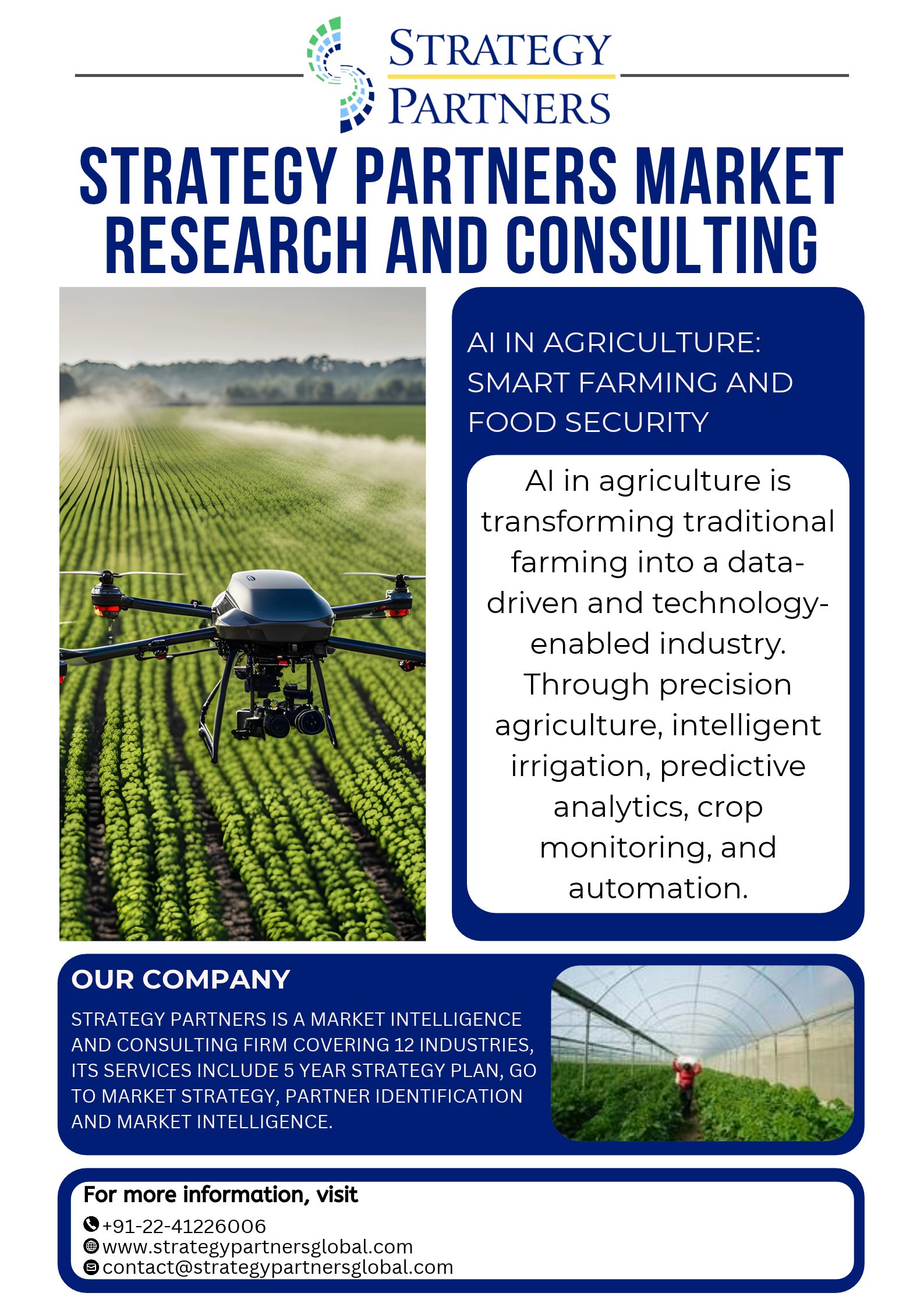
Agriculture is undergoing a significant transformation as AI in Agriculture becomes an integral part of modern farming practices. With the global population increasing, climate conditions becoming less predictable, and natural resources facing growing pressure, agricultural producers are adopting advanced technologies to improve productivity and ensure long-term food security. AI in agriculture is emerging as a powerful solution, enabling farmers to make data-driven decisions, optimise resource utilisation, and improve crop management.
Smart farming combines AI, machine learning, Internet of Things (IoT) devices, drones, robotics, and satellite imagery to create more efficient and sustainable agricultural systems. These technologies help farmers monitor crop health, predict weather patterns, detect diseases, and automate labour-intensive activities. As agricultural operations become increasingly technology-driven, AI is expected to play a central role in shaping the future of global food production.
The Growing Role of AI in Smart Farming
Traditional farming methods often depend on experience, manual observation, and historical weather patterns. Although these approaches remain valuable, they can be limited when addressing complex challenges such as unpredictable rainfall, soil degradation, pest outbreaks, and changing market demands.
AI-powered agricultural systems analyse large volumes of data collected from sensors, drones, satellites, and farm management platforms. Machine learning algorithms identify patterns and generate insights that support timely decision-making. Farmers can use these insights to determine optimal planting schedules, estimate crop yields, and identify potential risks before they affect production.
Precision agriculture is one of the most important applications of AI in farming. It enables farmers to manage individual sections of farmland according to specific soil conditions, moisture levels, and crop requirements. By applying water, fertilisers, and pesticides only where needed, precision farming can reduce input costs, minimise environmental impact, and improve agricultural efficiency.
Key Applications of Artificial Intelligence in Agriculture
AI is transforming agricultural operations across several areas, from crop monitoring and irrigation to harvesting and supply chain management.
Crop Health Monitoring: AI-powered drones and satellite imaging systems help identify early signs of crop stress, nutrient deficiencies, and disease outbreaks. Computer vision technology analyses images to detect abnormalities that may not be visible during routine field inspections. Early identification enables farmers to take corrective action and reduce potential crop losses.
Smart Irrigation: Water scarcity is a major challenge for agricultural production. AI-based irrigation systems combine soil moisture sensors, weather forecasts, and crop requirements to determine when and how much water should be applied. These systems help improve water-use efficiency while supporting healthy crop development.
Pest and Disease Detection: Machine learning models can identify pest infestations and plant diseases by analysing images and environmental data. Early detection allows farmers to implement targeted treatment strategies, reducing unnecessary pesticide use and limiting the spread of infections.
Predictive Analytics: AI algorithms analyse historical agricultural data, weather conditions, soil characteristics, and crop performance to forecast yields and identify production risks. These predictions help farmers plan operations, manage resources, and make informed decisions regarding planting and harvesting.
Agricultural Robotics: Autonomous tractors, robotic weeders, and automated harvesting systems are improving operational efficiency. These machines can perform repetitive tasks with greater precision, helping address labour shortages and reducing the physical demands of agricultural work.
AI’s Contribution to Global Food Security
Food security depends on the availability, accessibility, utilisation, and stability of food supplies. Agricultural productivity is closely linked to these factors, making technological innovation increasingly important as the global demand for food grows.
AI can contribute to food security by improving crop yields, reducing post-harvest losses, and strengthening agricultural resilience. Predictive systems help farmers anticipate climate-related risks, while precision farming technologies support more efficient use of land, water, and fertilisers.
AI also has applications beyond the farm. Intelligent supply chain platforms can improve demand forecasting, optimise transportation routes, monitor storage conditions, and reduce food waste. By connecting agricultural production with distribution networks, these technologies can help improve the reliability of food supplies.
For developing economies, AI-enabled farming solutions could support smallholder farmers through mobile advisory platforms, localised weather information, and digital agricultural services. However, successful implementation depends on affordable technology, reliable connectivity, access to training, and solutions tailored to local farming conditions.
Challenges in Adopting AI in Agriculture
Despite its potential, the adoption of AI in agriculture faces several challenges. High initial investment costs can prevent small and medium-sized farmers from accessing advanced equipment and digital platforms. Limited internet connectivity, particularly in rural areas, can also restrict the use of cloud-based agricultural services.
Data availability and quality represent another important concern. AI models require accurate and relevant information to generate reliable recommendations. Differences in soil conditions, crop varieties, climate, and farming practices can affect model performance across regions.
Furthermore, farmers need appropriate training to understand and effectively use AI-powered systems. Data privacy, cybersecurity, equipment maintenance, and the integration of new technologies with existing agricultural practices also require attention.
Addressing these challenges through public-private partnerships, agricultural research, digital infrastructure, and farmer education will be essential for expanding the benefits of smart farming.
Future Outlook: Building a Sustainable Agricultural Ecosystem
The future of agriculture will increasingly depend on the integration of AI with emerging technologies such as autonomous machinery, advanced sensors, satellite monitoring, and digital farm management platforms. These innovations are expected to support more precise, connected, and responsive agricultural operations.
Generative AI and intelligent advisory systems may further improve access to agricultural knowledge by providing farmers with customised recommendations on crop selection, fertiliser application, pest management, and market conditions. Meanwhile, advancements in robotics could enable greater automation across planting, crop maintenance, and harvesting activities.
The integration of AI with sustainable farming practices will also be important for addressing environmental challenges. Optimised resource management can help reduce agricultural waste, improve soil conservation, and support climate-resilient production systems.
As governments, technology companies, research institutions, and agricultural businesses continue investing in digital farming solutions, AI is positioned to become a key enabler of agricultural modernisation.
Conclusion
AI in agriculture is transforming traditional farming into a data-driven and technology-enabled industry. Through precision agriculture, intelligent irrigation, predictive analytics, crop monitoring, and automation, AI offers opportunities to improve productivity, reduce operational costs, and strengthen food security.
Although challenges related to affordability, infrastructure, data quality, and digital literacy remain, continued innovation and collaborative investment can help make these technologies more accessible.
Ultimately, the success of AI in agriculture will depend on its ability to complement farmers’ expertise while promoting productivity, sustainability, and resilience. By combining technological advancement with responsible resource management, smart farming can contribute significantly to building a more secure and sustainable global food system.