
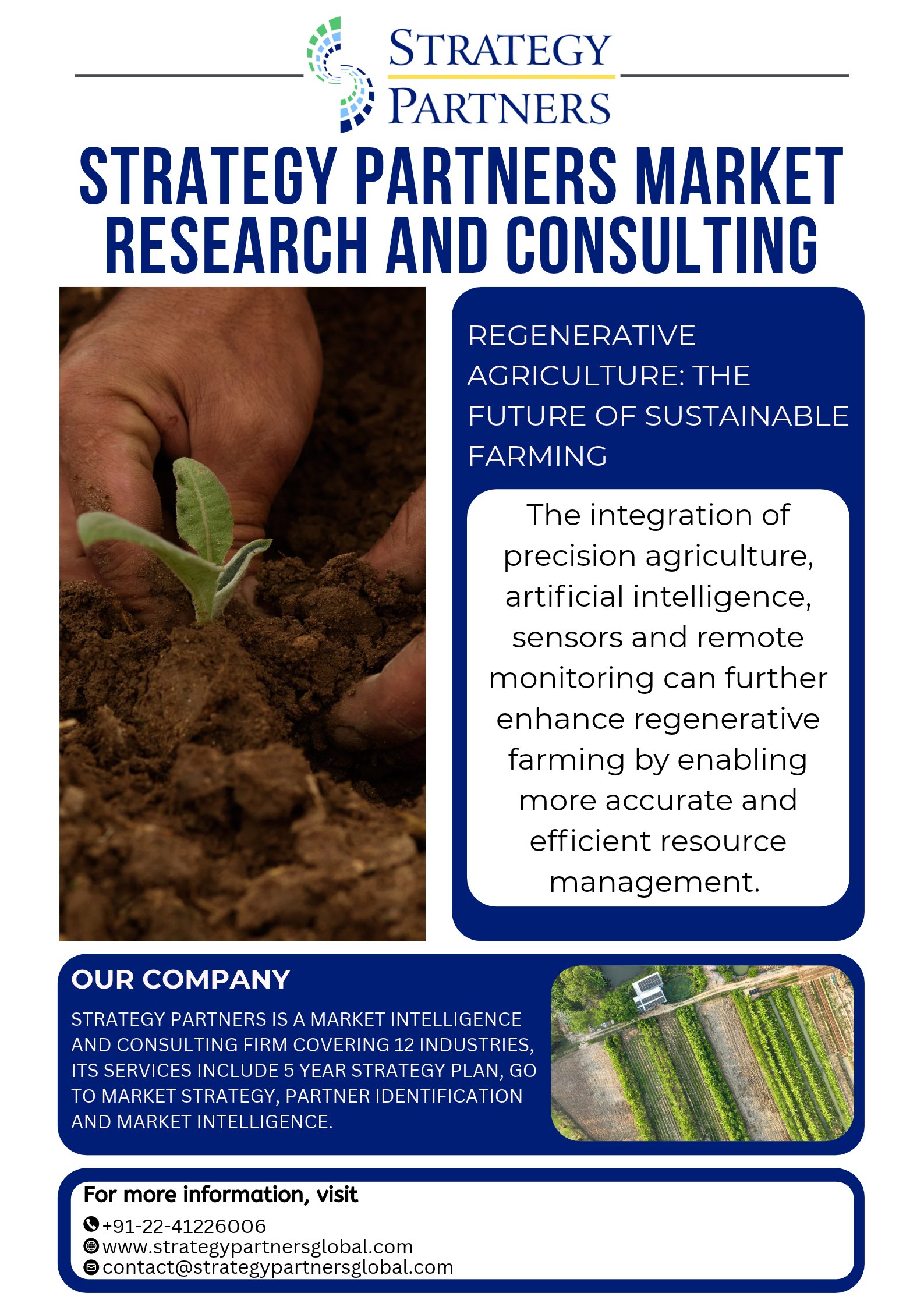
Regenerative agriculture is facing growing pressure to produce more food while protecting soil, water, biodiversity and natural resources. Climate change, soil degradation, water scarcity and rising input costs are creating challenges for farmers and food producers worldwide. In this changing environment, regenerative agriculture is emerging as an approach that goes beyond conventional sustainability by focusing on restoring and improving the health of agricultural ecosystems.
Regenerative agriculture combines farming practices designed to rebuild soil health, improve biodiversity, increase water retention and strengthen the resilience of farms. Rather than simply reducing environmental damage, the approach aims to create positive outcomes for soil, ecosystems and farming communities. As demand for sustainable food production increases, regenerative agriculture could become an important part of the future of global farming.
What Is Regenerative Agriculture?
Regenerative agriculture is a farming approach centered on restoring the natural resources that support agricultural production. Healthy soil is at the heart of the system because productive soil can improve crop growth, retain water, store carbon and support beneficial microorganisms.
Unlike a single standardized farming method, regenerative agriculture includes a combination of practices selected according to local climate, soil conditions, crops and farm requirements. These practices can include cover cropping, crop rotation, reduced or no tillage, composting, integrated livestock systems, agroforestry and the use of biological inputs.
The objective is to create healthier and more resilient agricultural systems while maintaining productive and economically viable farms. Farmers can gradually improve soil structure and fertility while reducing dependence on certain synthetic inputs.
Key Practices Driving Regenerative Farming
One of the most important practices is cover cropping. Cover crops are planted between main production cycles to keep soil covered and protected from erosion. They can also increase organic matter, improve soil structure and support beneficial soil organisms.
Crop rotation is another important component. Growing different crops across successive seasons can help break pest and disease cycles while improving nutrient management. Different crops have different root structures and nutrient requirements, allowing rotations to contribute to healthier soils.
Reduced tillage and no-till farming can also support soil regeneration. Excessive soil disturbance can accelerate erosion and reduce soil organic matter. Minimizing tillage helps preserve soil structure and allows soil organisms to establish more stable environments.
Organic matter is another major focus. Compost, crop residues and other organic materials can improve soil fertility and microbial activity. Increasing soil organic matter can also improve water-holding capacity, which is particularly valuable in regions experiencing drought or irregular rainfall.
Agroforestry integrates trees and shrubs into agricultural landscapes. Trees can provide shade, improve biodiversity, reduce wind erosion and create additional sources of income through fruit, timber or other products. In suitable environments, agroforestry can become an important part of climate-resilient agriculture.
Integrating livestock with crop production is another regenerative strategy. Properly managed grazing can return nutrients to the soil while creating a more circular agricultural system. However, grazing systems must be carefully managed to avoid overgrazing and soil degradation.
Regenerative Agriculture and Soil Health
Soil health is one of the strongest reasons regenerative agriculture is gaining attention. Intensive cultivation, erosion, excessive chemical inputs and monocropping can gradually reduce soil quality. Degraded soils may require greater quantities of fertilizers and irrigation to maintain productivity.
Regenerative practices seek to reverse these trends by increasing organic matter and biological activity. Healthy soils contain microorganisms, fungi, insects and other organisms that contribute to nutrient cycling and plant development.
Improved soil structure can also increase the ability of agricultural land to absorb and retain water. This can reduce runoff and erosion while helping crops withstand periods of limited rainfall. Better soil health can therefore contribute to both productivity and climate resilience.
Role in Climate-Smart Agriculture
Regenerative agriculture is increasingly connected with climate-smart farming because healthier agricultural ecosystems can become more resilient to extreme weather conditions.
Practices such as cover cropping, reduced tillage and agroforestry can contribute to increased carbon storage in soils and vegetation. At the same time, improved soil structure and water retention can help farms cope with droughts, heavy rainfall and temperature fluctuations.
However, the climate benefits of regenerative agriculture can vary significantly depending on local conditions and management practices. Measuring changes in soil carbon, greenhouse gas emissions, water use and biodiversity is therefore important for evaluating actual environmental outcomes.
Technology Is Transforming Regenerative Farming
Technology is becoming an important enabler of regenerative agriculture. Farmers increasingly have access to precision agriculture tools that can help them understand field-level conditions and apply resources more efficiently.
Satellite imagery, drones, soil sensors and GPS-enabled machinery can provide information about crop health, soil moisture and nutrient requirements. Artificial intelligence and data analytics can further analyze this information to identify patterns and support farm-management decisions.
Precision application technologies can help farmers apply fertilizers, water and crop-protection products according to specific field requirements. This can reduce unnecessary input use while improving efficiency.
Digital platforms can also help farmers track soil health indicators, crop rotations, input use and environmental performance. As regenerative agriculture expands, data-driven monitoring could become increasingly important for demonstrating improvements and supporting sustainability claims.
Economic Opportunities for Farmers
Regenerative agriculture is not only an environmental strategy; it also has the potential to create economic benefits. Healthier soils can improve water efficiency and nutrient availability, while reducing erosion and potentially lowering dependence on certain agricultural inputs.
Diversification can provide another economic advantage. Agroforestry, integrated livestock systems, cover-crop production and specialty crops can create additional revenue opportunities for farmers.
The growth of sustainable food markets is also encouraging companies to develop regenerative agriculture sourcing programs. Food manufacturers and retailers are increasingly interested in understanding how agricultural commodities are produced and how environmental impacts can be reduced across supply chains.
However, transitioning to regenerative agriculture can require investment, technical knowledge and patience. Farmers may face changes in equipment requirements, crop management practices and short-term production economics. Access to training, financing, market incentives and reliable measurement systems will therefore be important for wider adoption.
The Future of Regenerative Agriculture
The future of regenerative agriculture will depend on collaboration between farmers, researchers, technology companies, governments, food producers and consumers. There is no universal regenerative farming model because agricultural conditions differ significantly across regions.
Research will play an important role in identifying which practices deliver the strongest environmental and economic benefits in different climates and farming systems. Improved soil testing, remote sensing and digital monitoring could make it easier to measure changes in soil health, biodiversity, water efficiency and carbon outcomes.
Governments can support adoption through agricultural extension programs, research funding, incentives and policies that encourage soil conservation and resource efficiency. Food companies can also contribute by developing long-term sourcing partnerships that provide farmers with greater market certainty.
As the global population and demand for food continue to grow, agriculture must become more productive while protecting the natural systems on which food production depends. Regenerative agriculture offers a pathway toward achieving this balance by placing soil health, biodiversity, water management and ecosystem resilience at the center of farming.
Conclusion
Regenerative agriculture represents a shift from simply sustaining agricultural systems to actively restoring and improving them. Through practices such as cover cropping, crop rotation, reduced tillage, composting, agroforestry and integrated livestock management, farmers can improve soil health and strengthen the resilience of their operations.
The integration of precision agriculture, artificial intelligence, sensors and remote monitoring can further enhance regenerative farming by enabling more accurate and efficient resource management. While challenges remain, particularly around transition costs, measurement and farmer education, the long-term potential is significant.
As agriculture responds to climate change, resource constraints and rising food demand, regenerative agriculture could become an increasingly important foundation for sustainable and resilient food production. Its success will ultimately depend on combining traditional agricultural knowledge with moder