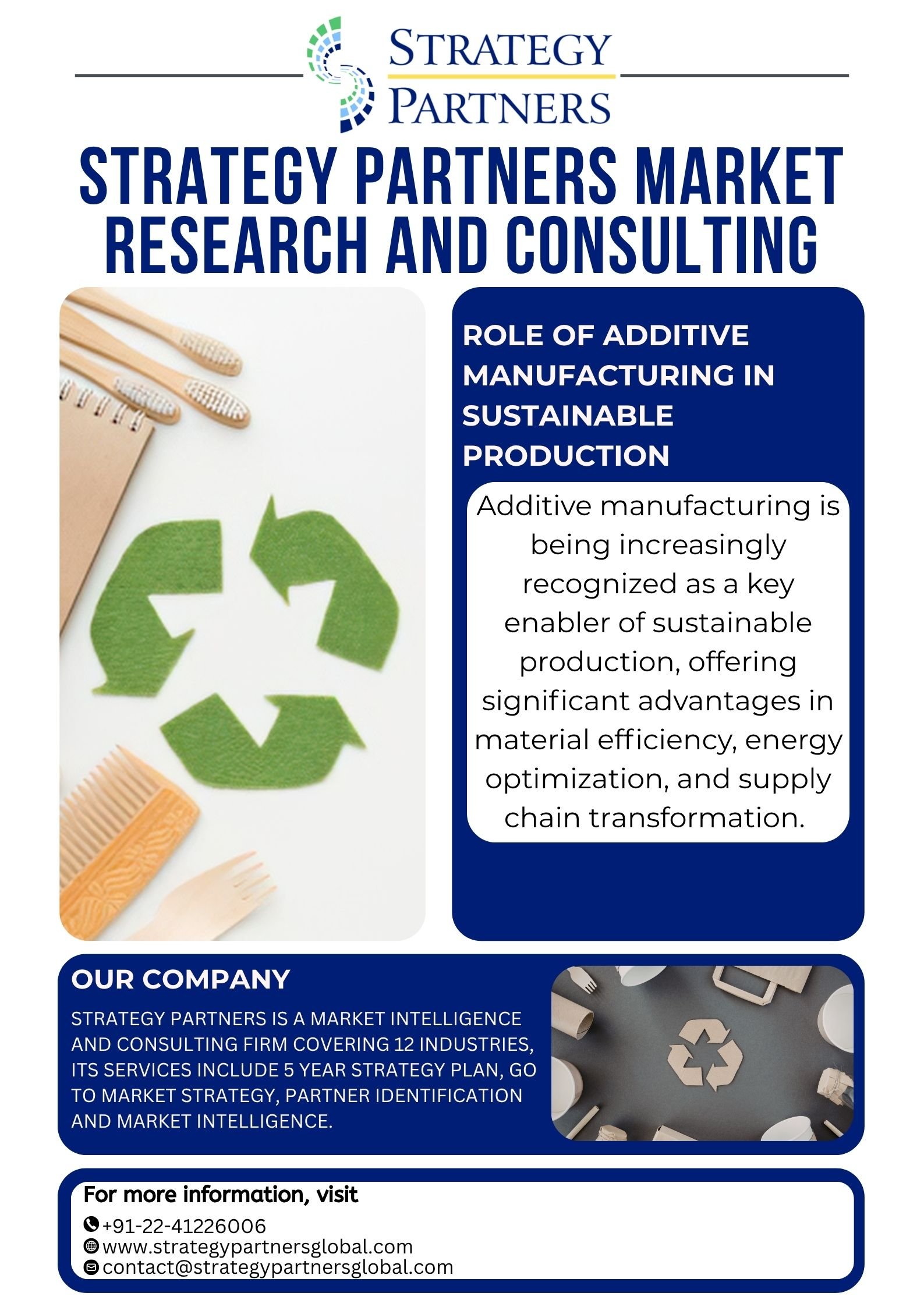
Role of Additive Manufacturing in Sustainable Production
Additive manufacturing enhances sustainable production through material efficiency, waste reduction, and localized manufacturing. However, high costs, speed limitations, and standardization challenges continue to impact large-scale adoption.
Introduction to 3D Printing and Sustainability
Industries increasingly focus on additive manufacturing to build eco-friendly and efficient operations. We often call this technology 3D printing. It builds parts layer by layer straight from digital designs. This method cuts down on waste and skips the heavy machining that older methods need.
Traditional manufacturing cuts away extra material. In contrast, 3D printing uses exactly the material it needs. It also helps engineers create better designs. Today, companies use 3D printing to shrink their carbon footprints. They also use it to speed up supply chains and recycle more materials. Furthermore, printing parts locally means less shipping, which greatly helps the environment.
The Past: A Tool for Prototyping
Years ago, engineers mainly used 3D printing to build prototypes and test designs. They rarely used it for large-scale production. High costs, slow speeds, and technical limits kept its green benefits small.
Early 3D printers could only use a few materials. Often, the printed parts were too weak for real-world use. Therefore, the technology only helped the environment by saving time and materials during the design phase.
Most companies did not understand its green benefits. They also struggled to add it to their daily factory lines. As a result, older manufacturing methods kept dominating the industry, and 3D printing stayed a small, niche tool.
The Present: Mainstream Integration
Today, factories actively blend 3D printing into their daily production. This shift deeply supports environmental goals. Better materials, faster printers, and smarter software now allow companies to print strong, usable parts.
Many major industries—like aerospace, healthcare, and car manufacturing—rely on 3D printing. They use it to slash waste, save energy, and shorten production times. For example, car and plane makers design much lighter parts. These lighter parts burn less fuel during travel.
Furthermore, businesses now print items on-demand and closer to the buyer. This approach shrinks warehouse needs and cuts delivery emissions. Companies also explore new ways to recycle old plastics and metals into fresh printing materials. Overall, experts view 3D printing as a vital tool for green manufacturing.
The Future: Transforming Industrial Ecosystems
In the future, 3D printing will transform green production even more. Engineers will invent greener materials, like plant-based plastics. They will also build printers that consume less power.
New digital tools—like Artificial Intelligence and smart sensors—will pair directly with 3D printers. These tools will help factories run smoother and waste fewer resources. Furthermore, factories will build “closed-loop” systems. In these systems, workers will constantly recycle old products to print new ones.
As local printing hubs expand, companies will rely less on giant, distant factories. This shift will drastically lower shipping pollution. Over time, 3D printing will sit at the very heart of sustainable industry.
Market Drivers
Several key forces push companies to adopt 3D printing:
-
Strict Regulations: Governments apply strict rules to lower carbon emissions. These laws force industries to find cleaner methods.
-
Cost Savings: Companies spend less money when they use less material, hold less inventory, and shorten their supply chains.
-
Better Technology: Printers now run faster and use more reliable materials, making mass production possible.
-
Customer Demand: Buyers demand custom and complex products. 3D printing meets this demand easily.
-
Corporate Goals: Corporate boards make strong green commitments, which drives more funding into these technologies.
Restraints and Roadblocks
Despite the benefits, certain roadblocks slow down the spread of 3D printing. Buying top-tier printers and materials costs a lot of money upfront. This high price stops many small businesses from upgrading.
Speed also remains an issue. Traditional machines still churn out simple parts much faster than 3D printers. Also, companies struggle to find standardized printing materials in massive quantities.
Surprisingly, the printing process itself uses a lot of electricity. This high power draw can cancel out some green benefits. Finally, the industry lacks clear safety and quality standards. Builders must solve these issues before the technology can truly replace old methods.
Implementation Challenges
Companies must solve specific challenges to succeed with 3D printing:
-
Quality Control: Factories must guarantee that every printed part holds up perfectly, especially in airplanes or medical devices.
-
Factory Integration: Adding 3D printers to an old factory line takes hard work. Managers must change entire workflows and train their staff.
-
Cybersecurity: Hackers pose a threat. Cybercriminals can easily steal or alter digital design files.
-
Supply Chain Shifts: Changing the supply chain creates headaches. Companies often depend on rare, specialized printing materials.
Leaders must tackle these challenges through teamwork, innovation, and smart rules to unlock the technology’s full potential.
Conclusion
In short, 3D printing serves as a powerful tool for green production. It saves materials, cuts energy use, and changes how we ship goods. In the past, companies only used it for basic models. Now, factories rely on it for real, heavy-duty production.
Future technical upgrades will boost these green benefits even more. While costs and speed limits slow things down today, clear market trends push the technology forward. With smart investments and constant innovation, 3D printing will help industries reach their long-term environmental goals.