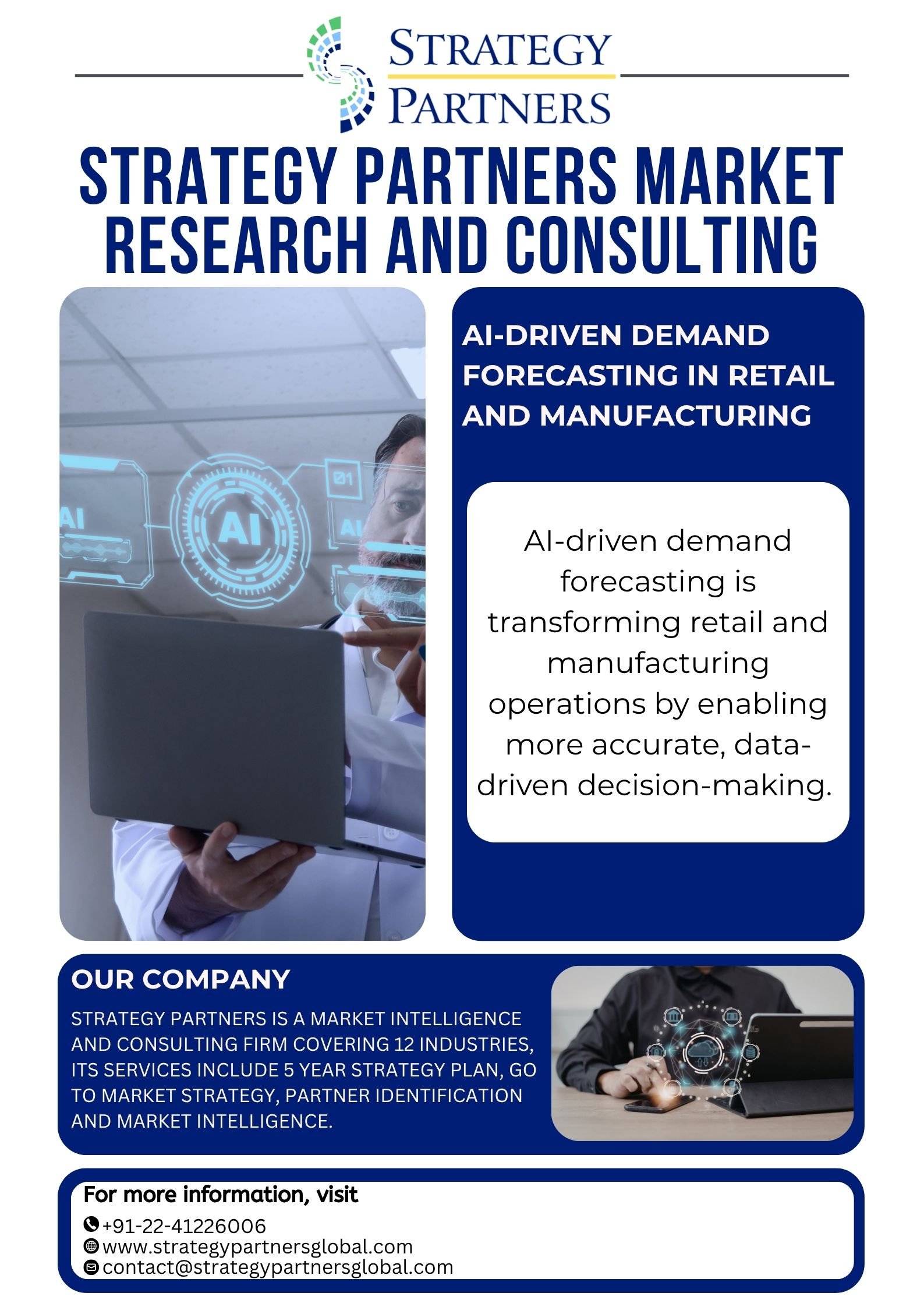
AI-Driven Demand Forecasting in Retail and Manufacturing
AI-driven demand forecasting boosts accuracy, optimizes inventory, and improves supply chains. However, data quality, high costs, and integration issues still limit its full potential.
Introduction to AI Demand Forecasting
Businesses now recognize AI demand forecasting as a vital tool. It boosts operational efficiency, improves inventory management, and helps leaders make better decisions. Today, advanced artificial intelligence (AI) and machine learning (ML) models quickly replace traditional methods. Older methods relied too much on outdated sales data and slow manual analysis.
Modern AI easily processes massive amounts of data. It spots complex patterns and generates highly accurate predictions. Today’s market changes rapidly. Therefore, companies must anticipate demand fluctuations to optimize supply chains and lower risks. Consequently, retailers and manufacturers eagerly adopt AI forecasting solutions to cut costs and boost customer satisfaction.
How Businesses Forecasted Demand in the Past
Historically, companies relied on simple statistics and strict rules to forecast demand. Analysts commonly used time-series analysis and regression models. They used these tools to estimate future sales based on past trends.
However, these older methods struggled to capture complex market dynamics. They often missed external factors like changing consumer habits, new trends, and economic shifts. Limited data, seasonal changes, and sudden market shocks frequently ruined forecast accuracy.
Furthermore, teams frequently had to adjust forecasts manually. This manual work caused costly inefficiencies and errors. As a result, companies constantly battled inventory imbalances, stockouts, and overstocking. A total lack of real-time data severely limited these traditional approaches.
The Current State of AI in Forecasting
Today, retail and manufacturing industries widely adopt AI-driven forecasting. Better data analytics, cloud computing, and smart algorithms drive this rapid growth. Companies use AI to analyze diverse data sources instantly. These sources include point-of-sale records, consumer behavior, weather patterns, and social media trends.
These smart models continuously learn and adapt to market changes. This constant learning dramatically improves forecast accuracy. Real-time data processing empowers organizations to make proactive choices. They improve inventory management, production planning, and supply chain flow.
Retailers leverage AI to enhance planning, optimize prices, and personalize shopping experiences. Similarly, manufacturers utilize AI to streamline production, cut lead times, and allocate resources better. Ultimately, AI transforms forecasting into a powerful strategic advantage.
The Future of Demand Forecasting
Looking ahead, AI forecasting will become even more sophisticated. It will act as the core of modern digital transformation. Experts anticipate that advanced technologies like deep learning and the Internet of Things (IoT) will further enhance these capabilities.
Soon, companies will develop fully autonomous supply chains. These systems will seamlessly integrate forecasting, planning, and execution. Predictive analytics will empower organizations to anticipate demand and recommend the best actions during major disruptions.
Additionally, businesses will use digital twins to improve scenario planning and manage risks. As data and computing power expand, AI solutions will deliver instant insights with incredible precision. This exciting evolution will strengthen decision-making and support sustainable growth globally.
Key Market Drivers
Several crucial factors drive the adoption of AI forecasting solutions. First, global supply chains grow more complex every day. This complexity pushes organizations to invest heavily in advanced tools for real-time visibility.
Second, the massive availability of big data enables highly accurate predictions. Cost reduction goals, especially in logistics, also push companies toward AI. Furthermore, customers now demand constant product availability and faster delivery times.
This consumer pressure compels organizations to improve their forecast accuracy immediately. Finally, ongoing digital transformation and the shift to cloud platforms heavily support these AI systems. Together, these drivers create a perfect environment for AI growth.
Restraints Limiting AI Adoption
Despite clear benefits, several major restraints limit widespread AI adoption. High setup costs create a massive barrier, especially for smaller businesses. Companies must invest heavily in modern data infrastructure to succeed.
Poor data quality and limited availability also hurt AI performance. Additionally, a severe shortage of skilled AI professionals hinders implementation efforts across many industries.
Furthermore, integrating new AI tools with outdated legacy systems causes major headaches. Organizations also face growing concerns about data privacy, security, and strict regulations. Leaders must actively address these serious restraints to ensure successful AI deployment.
Ongoing Implementation Challenges
Implementing AI-driven forecasting brings several tough challenges. Teams must ensure data accuracy, consistency, and smooth integration across multiple sources. Model transparency also raises major concerns. Users often view complex AI algorithms as mysterious “black boxes.”
Therefore, leaders must prioritize change management. They must train employees thoroughly to work alongside new AI systems. Dynamic markets and sudden disruptions, like economic shifts, frequently harm forecast accuracy.
Consequently, IT teams must continuously monitor and update models to maintain peak performance. Companies must tackle these hurdles through strong leadership, innovation, and teamwork to maximize AI benefits.
Conclusion
AI demand forecasting rapidly transforms retail and manufacturing operations. It empowers leaders to make highly accurate, data-driven decisions. Traditional methods simply lacked these modern capabilities.
Today’s landscape highlights incredible technological advancements and widespread industry adoption. Future innovations will definitely improve accuracy and integrate smoothly with everyday business processes.
While strong market drivers support this shift, companies still battle real implementation challenges. However, with steady investment in technology and talent, AI forecasting will soon dominate the industry. It will play a vital role in boosting efficiency, cutting costs, and driving sustainable business growth.