
Introduction
Environmental, Social, and Governance (ESG) principles have become a key factor in shaping corporate strategies worldwide. Investors, regulators, customers, and other stakeholders increasingly expect organizations to demonstrate measurable progress in sustainability and responsible business practices. Among the various tools available to support ESG initiatives, carbon footprint assessments play a critical role by helping organizations understand, measure, and manage their greenhouse gas (GHG) emissions. These assessments provide valuable insights into environmental performance and serve as a foundation for achieving broader sustainability goals.
Understanding Carbon Footprint Assessments
A carbon footprint assessment is a systematic process used to quantify the greenhouse gas emissions generated by an organization, product, service, or project. Emissions are typically measured in carbon dioxide equivalent (CO₂e) and categorized into three scopes. Scope 1 includes direct emissions from company-owned facilities and vehicles, Scope 2 covers indirect emissions from purchased electricity and energy sources, and Scope 3 includes emissions generated throughout the value chain, such as supplier activities, transportation, business travel, and product use. By evaluating emissions across these categories, organizations gain a comprehensive understanding of their environmental impact.
Supporting Environmental Objectives
The environmental component of ESG focuses on reducing negative impacts on the planet, including greenhouse gas emissions, resource consumption, and pollution. Carbon footprint assessments provide the baseline data needed to identify major emission sources and prioritize reduction initiatives. Without accurate measurement, organizations may struggle to determine where emissions are occurring and which actions will deliver the greatest environmental benefits.
For example, an industrial manufacturer may discover that a significant portion of its emissions originates from energy-intensive production processes. Armed with this information, the company can invest in energy-efficient technologies, renewable energy solutions, or process improvements that reduce emissions while lowering operating costs. By enabling targeted action, carbon footprint assessments help organizations make meaningful progress toward environmental sustainability goals.
Enhancing ESG Reporting and Transparency
Transparency is a fundamental requirement of modern ESG reporting. Investors and stakeholders increasingly demand reliable sustainability data that demonstrates genuine environmental performance rather than broad sustainability claims. Carbon footprint assessments provide the measurable data necessary to support ESG disclosures and sustainability reports.
Organizations that regularly assess and report their emissions can communicate progress toward climate targets more effectively. Accurate emissions data improves the credibility of sustainability reports and helps businesses align with recognized reporting frameworks such as the Global Reporting Initiative (GRI), Sustainability Accounting Standards Board (SASB), and International Sustainability Standards Board (ISSB). Enhanced transparency strengthens stakeholder trust and positions organizations as responsible corporate citizens.
Strengthening Climate Risk Management
Climate-related risks are becoming a major concern for businesses across all sectors. Governments are introducing stricter environmental regulations, carbon pricing mechanisms, and mandatory disclosure requirements. Organizations that fail to understand and manage their emissions may face regulatory penalties, increased operational costs, and reputational risks.
Carbon footprint assessments enable companies to identify climate-related risks before they become significant challenges. By understanding emission sources and future regulatory exposure, organizations can develop proactive mitigation strategies. This approach not only improves ESG performance but also enhances long-term business resilience and operational stability.
Driving Sustainable Business Decisions
One of the most valuable benefits of carbon footprint assessments is their ability to support informed decision-making. Sustainability investments often require significant financial resources, making it essential to identify initiatives that provide the greatest environmental and economic benefits.
Emissions assessments help organizations evaluate different reduction opportunities and prioritize projects based on their potential impact. Whether investing in renewable energy, upgrading equipment, improving logistics efficiency, or redesigning products, businesses can use emissions data to guide strategic decisions. This data-driven approach ensures that sustainability initiatives align with corporate objectives while delivering measurable ESG outcomes.
Creating Social Value Through Emission Reduction
Although carbon footprint assessments are primarily associated with environmental performance, they also contribute to the social component of ESG. Efforts to reduce emissions often result in cleaner air, reduced pollution, and healthier communities. Organizations that adopt sustainable practices demonstrate their commitment to protecting employee well-being and supporting local populations.
Reduced energy consumption and cleaner production processes can improve workplace conditions while minimizing environmental impacts on surrounding communities. These benefits strengthen stakeholder relationships and reinforce the organization’s reputation as a socially responsible business. As a result, carbon footprint assessments indirectly support social sustainability objectives alongside environmental goals.
Improving Governance and Accountability
Strong governance is essential for successful ESG implementation. Carbon footprint assessments contribute to governance by providing accurate, verifiable data that supports decision-making and accountability. Organizations can establish clear sustainability targets, monitor progress, and ensure that environmental commitments are backed by measurable performance indicators.
Regular emissions assessments create structured reporting processes and encourage greater oversight from senior management and boards of directors. This transparency improves accountability and helps integrate sustainability into overall corporate governance frameworks. Investors and regulators increasingly view robust environmental data management as an indicator of effective governance practices.
Managing Scope 3 Emissions Across the Value Chain
For many organizations, Scope 3 emissions represent the largest share of their total carbon footprint. These emissions originate from activities beyond direct operational control, including supplier operations, transportation networks, product distribution, and customer use of products.
Carbon footprint assessments help organizations identify significant value-chain emissions and collaborate with suppliers and partners to reduce them. Companies can implement sustainable procurement practices, improve transportation efficiency, and encourage suppliers to adopt cleaner technologies. Addressing Scope 3 emissions strengthens supply chain resilience while contributing to broader ESG objectives.
Leveraging Technology for Better Carbon Management
Advancements in digital technology have transformed the way organizations conduct carbon footprint assessments. Modern ESG software platforms, cloud-based reporting systems, artificial intelligence, and Internet of Things (IoT) technologies enable more accurate and efficient emissions monitoring.
These tools automate data collection, reduce reporting errors, and provide real-time visibility into environmental performance. Organizations can track emissions trends continuously and make timely adjustments to sustainability strategies. The integration of technology into carbon management improves both the effectiveness and efficiency of ESG initiatives.
Long-Term Benefits for Businesses
Beyond regulatory compliance and sustainability reporting, carbon footprint assessments provide significant long-term business advantages. Organizations that actively measure and manage emissions often achieve greater operational efficiency, lower energy costs, enhanced brand reputation, and stronger investor confidence. Sustainability-focused companies are increasingly viewed as lower-risk investments and more attractive partners within global supply chains.
As customers and investors place greater emphasis on sustainability performance, businesses with robust carbon management practices gain a competitive advantage. Carbon footprint assessments therefore serve not only as environmental tools but also as strategic assets that support growth, innovation, and long-term value creation.
Conclusion
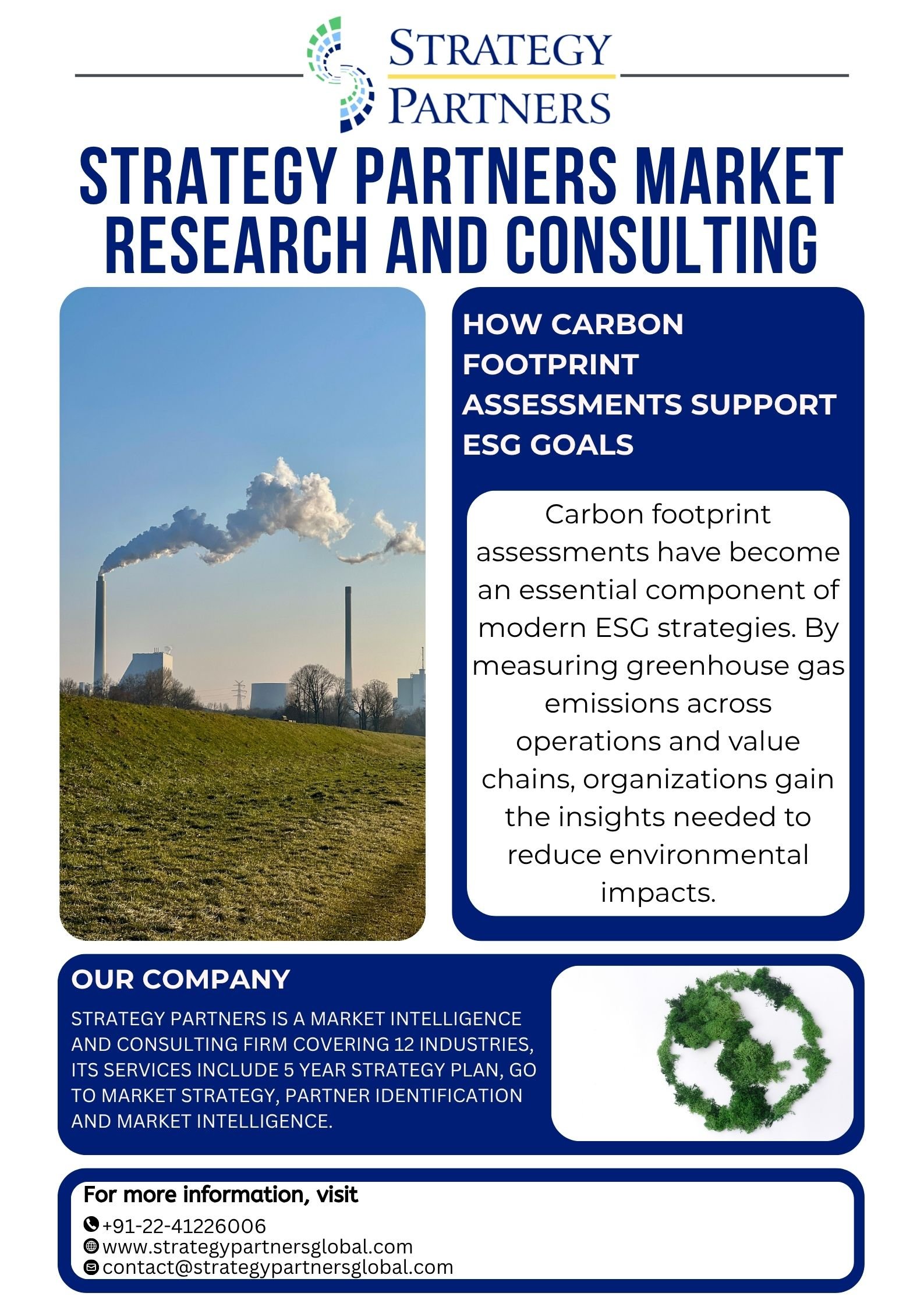
Carbon footprint assessments have become an essential component of modern ESG strategies. By measuring greenhouse gas emissions across operations and value chains, organizations gain the insights needed to reduce environmental impacts, improve reporting transparency, strengthen governance practices, and manage climate-related risks. These assessments enable businesses to transform sustainability commitments into measurable actions and demonstrate accountability to stakeholders.
As ESG expectations continue to evolve, organizations that prioritize carbon footprint assessments will be better positioned to achieve sustainability objectives, comply with emerging regulations, and build resilient, future-ready business models. Ultimately, carbon footprint assessments not only support environmental goals but also contribute to stronger social outcomes, improved governance, and sustainable long-term success.