Transforming Digital Infrastructure Through Sustainable Data Centers
The Data Center has rapid expansion of digital services, cloud computing, artificial intelligence (AI), edge computing, and the Internet of Things (IoT) has dramatically increased the demand for data processing and storage worldwide. At the heart of this digital transformation are data centers, which serve as the foundational infrastructure supporting modern economies. However, the growing computational requirements of businesses and consumers have led to substantial increases in energy consumption, carbon emissions, water usage, and electronic waste generation.
As environmental concerns become increasingly prominent, organizations are prioritizing sustainable data center operations and green computing strategies to minimize their ecological footprint. Modern data centers are evolving beyond traditional server facilities into highly optimized, energy-efficient ecosystems that leverage renewable energy, intelligent cooling systems, advanced power management, and circular economy principles. Sustainability has become a strategic necessity rather than an optional initiative, driving innovation across the entire data center industry.
Rising Importance of Sustainable Data Center Operations
The global push toward carbon neutrality and environmental responsibility has placed significant pressure on technology providers, cloud operators, and enterprise organizations to reduce the environmental impact of their digital infrastructure. Data centers account for a substantial share of global electricity consumption, making energy efficiency a critical focus area for operators.
Governments, regulatory bodies, investors, and customers increasingly expect organizations to demonstrate measurable sustainability commitments. Consequently, data center operators are implementing comprehensive environmental strategies that balance operational performance with responsible resource management. Sustainable operations not only help reduce carbon emissions but also generate significant cost savings through lower energy consumption and improved resource utilization.
As digital transformation accelerates across industries, sustainable data center management has become essential for ensuring long-term business resilience and regulatory compliance.
Role of Energy-Efficient Infrastructure in Green Computing
Energy efficiency serves as the foundation of green computing initiatives. Modern data centers are deploying advanced hardware technologies designed to deliver greater computational performance while consuming less power. High-efficiency processors, solid-state storage systems, intelligent power supplies, and optimized server architectures contribute significantly to reducing energy consumption.
Virtualization technologies further enhance efficiency by allowing multiple workloads to run on fewer physical servers. By consolidating computing resources, organizations can reduce hardware requirements, lower electricity usage, and minimize cooling demands.
Additionally, workload optimization and resource scheduling technologies help maximize server utilization rates, ensuring that computational resources are used effectively without unnecessary energy waste. These advancements are enabling organizations to maintain high-performance computing environments while achieving sustainability objectives.
Renewable Energy Driving Sustainable Data Centers
Renewable energy adoption has become one of the most influential strategies for reducing the environmental impact of data center operations. Leading cloud service providers and hyperscale operators are increasingly investing in solar, wind, hydroelectric, and geothermal energy sources to power their facilities.
Many organizations are entering long-term renewable energy purchase agreements to secure clean electricity while supporting the development of sustainable energy infrastructure. Some data centers are also integrating on-site solar installations and battery energy storage systems to enhance energy resilience and reduce dependence on conventional power grids.
The transition toward renewable energy significantly lowers greenhouse gas emissions while helping organizations meet ambitious environmental, social, and governance (ESG) targets. As renewable technologies become more accessible and cost-effective, their adoption is expected to accelerate across the global data center landscape.
Advanced Cooling Technologies Enhancing Efficiency
Cooling systems represent one of the largest contributors to data center energy consumption. Traditional cooling methods often require substantial electricity usage, making thermal management a key focus area for sustainability improvements.
Modern facilities are adopting innovative cooling technologies such as liquid cooling, free-air cooling, immersion cooling, and AI-driven environmental controls. These solutions improve heat dissipation while significantly reducing energy requirements compared to conventional air-conditioning systems.
Artificial intelligence plays an increasingly important role in optimizing cooling performance by continuously monitoring environmental conditions and dynamically adjusting cooling resources based on workload demands. Such intelligent systems minimize energy waste while maintaining optimal operating conditions for critical IT equipment.
As computing densities continue to increase, advanced cooling technologies will remain central to sustainable data center development.
Artificial Intelligence Supporting Green Computing
Artificial intelligence has emerged as a powerful tool for improving sustainability across data center operations. AI-powered management platforms analyze vast amounts of operational data to identify inefficiencies, predict equipment failures, and optimize resource utilization in real time.
Machine learning algorithms help regulate power consumption, cooling systems, workload distribution, and infrastructure maintenance schedules. Predictive analytics enables operators to proactively address performance issues before they result in downtime or resource waste.
Furthermore, AI supports intelligent energy management by balancing workloads across multiple facilities based on energy availability, electricity pricing, and environmental conditions. These capabilities contribute significantly to reducing operational costs while advancing sustainability objectives.
Circular Economy and E-Waste Reduction Strategies
Electronic waste represents a growing challenge for the technology industry. Data center operators are increasingly embracing circular economy principles to extend equipment lifecycles and minimize environmental impact.
Refurbishing, repurposing, and recycling hardware components allow organizations to maximize the value of IT assets while reducing waste generation. Equipment that no longer meets performance requirements for primary workloads can often be redeployed for secondary applications or donated to educational and research institutions.
Manufacturers are also designing products with greater recyclability and sustainability in mind. Responsible disposal practices and certified recycling programs help ensure that valuable materials are recovered while preventing hazardous substances from entering the environment.
By prioritizing circular economy initiatives, organizations can significantly reduce their environmental footprint while lowering operational expenses.
Water Conservation in Sustainable Data Centers
Water usage has become another important sustainability consideration, particularly in regions facing water scarcity challenges. Traditional cooling systems often consume significant amounts of water, prompting operators to seek more efficient alternatives.
Modern facilities are implementing water-saving technologies such as closed-loop cooling systems, recycled water usage, and advanced monitoring solutions that optimize consumption levels. Some operators are designing facilities that utilize ambient environmental conditions to reduce reliance on water-intensive cooling methods.
These initiatives help preserve valuable natural resources while enhancing operational sustainability. Water stewardship is increasingly viewed as an integral component of comprehensive environmental management strategies within the data center sector.
Data Analytics Enabling Sustainable Decision-Making
Advanced analytics platforms are transforming how organizations monitor and improve sustainability performance. Data centers generate enormous volumes of operational data related to energy consumption, cooling efficiency, equipment utilization, and environmental conditions.
Real-time analytics dashboards provide operators with actionable insights that support continuous improvement efforts. Key performance indicators such as Power Usage Effectiveness (PUE), carbon emissions, water usage effectiveness, and renewable energy utilization help organizations measure progress toward sustainability goals.
Predictive analytics further enables proactive planning by identifying future resource requirements and optimizing infrastructure investments. Data-driven decision-making has become essential for achieving long-term sustainability objectives while maintaining operational excellence.
Sustainability Challenges Facing the Industry
Despite significant progress, achieving sustainable data center operations remains a complex challenge. The growing demand for artificial intelligence workloads, high-performance computing, and digital services continues to drive increased energy requirements.
Balancing performance expectations with environmental goals requires substantial investments in infrastructure modernization, renewable energy adoption, and advanced management technologies. Additionally, regional differences in energy availability, regulatory frameworks, and climate conditions can complicate sustainability initiatives.
Cybersecurity considerations also play an important role, as sustainability technologies become increasingly integrated with operational control systems. Organizations must ensure that efficiency improvements do not compromise the reliability or security of critical digital infrastructure.
Future Outlook for Green Data Centers
The future of sustainable data centers will be defined by greater automation, renewable energy integration, and intelligent resource management. Emerging technologies such as AI-optimized infrastructure, carbon-aware computing, modular data centers, advanced battery storage, and hydrogen-powered backup systems are expected to reshape the industry.
Organizations will increasingly adopt holistic sustainability frameworks that address energy efficiency, carbon reduction, water conservation, and responsible resource utilization simultaneously. As environmental regulations become more stringent and stakeholder expectations continue to rise, sustainability will remain a central driver of innovation and investment.
Future data centers are likely to operate as highly intelligent ecosystems capable of dynamically optimizing performance while minimizing environmental impact across every aspect of operations.
The Strategic Outlook
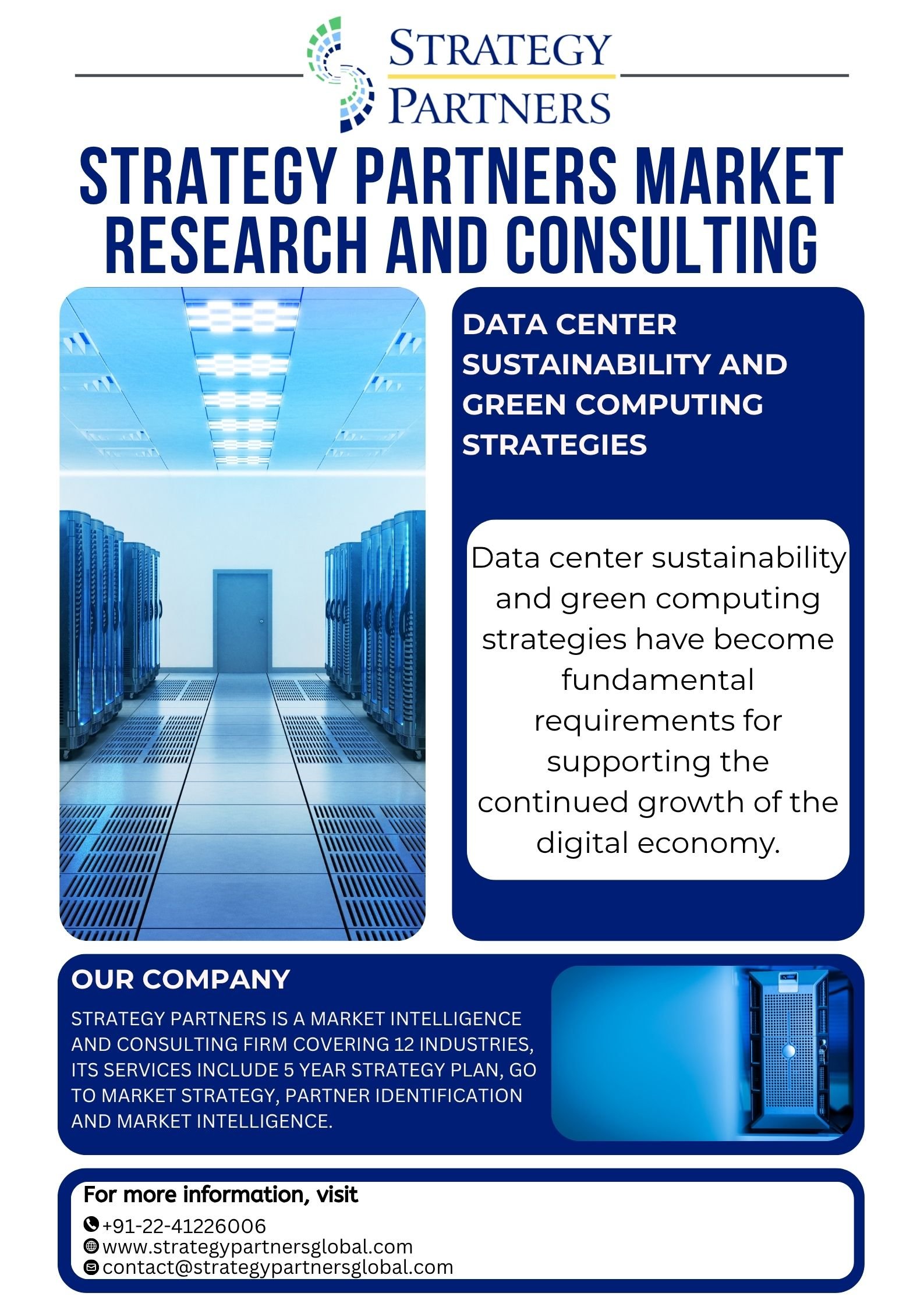
In conclusion, data center sustainability and green computing strategies have become fundamental requirements for supporting the continued growth of the digital economy. As organizations seek to balance expanding computational demands with environmental responsibility, investments in energy-efficient technologies, renewable energy, intelligent cooling systems, and circular economy initiatives will continue to accelerate.
The most successful data center operators will be those that integrate sustainability into every layer of their infrastructure strategy. By leveraging advanced technologies and adopting proactive environmental practices, organizations can reduce operational costs, strengthen regulatory compliance, and contribute meaningfully to global sustainability goals. Green computing is no longer simply an environmental initiative—it is a critical business strategy shaping the future of digital infrastructure.