The Rise of Hybrid Delivery Models
Hybrid delivery models blend physical and digital services to increase flexibility and value. Today, professional service firms use these frameworks as strategic tools rather than temporary fixes. By integrating on-site work with automation and remote teams, companies improve speed and client experiences. Consequently, firms must now rethink how they deploy expertise to meet rising demands for faster, outcome-driven results.
Evolution from the Past
Historically, professional services relied almost entirely on face-to-face engagement. Consultants and lawyers built trust through a sustained physical presence at client locations. While globalization eventually introduced offshore centers, technology adoption remained slow. During this era, firms used remote work mainly for cost-cutting rather than strategic growth.
The Current Landscape
Today, hybrid models serve as a core operating strategy. Advances in cloud infrastructure and AI allow firms to deliver complex services remotely without losing quality. Consequently, firms now segment work based on complexity. While high-level advisors meet clients virtually or in person, global teams handle analytical tasks. This shift helps service providers differentiate themselves through transparency and speed.
A Tech-Driven Future
Looking ahead, hybrid models will become even more embedded in the industry. Automation and advanced analytics will soon handle most data-intensive routine work. As a result, human experts will focus more on judgment and building relationships. Furthermore, immersive digital platforms will likely blur the line between physical and virtual delivery.
Key Drivers of Growth
Several factors are accelerating the shift toward hybrid frameworks:
-
Efficiency: Firms balance high-value roles with cost-efficient global delivery.
-
Scalability: Providers can scale teams rapidly to meet changing client needs.
-
Client Demand: Modern clients expect faster responses and flexible engagement.
-
Tech Tools: Secure cloud platforms reduce the barriers to remote collaboration.
-
Talent Access: Hybrid models help companies attract and keep global talent.
Barriers to Adoption
Despite the benefits, some obstacles remain:
-
Cultural Resistance: Traditional environments often struggle to move away from in-person models.
-
Security Risks: Data privacy and regulatory rules can limit remote adoption in sensitive sectors.
-
Quality Control: Maintaining consistent standards across different global locations is difficult.
-
Skill Gaps: Distributed teams require constant training and new management styles.
Operational Challenges
Transitioning to a hybrid model introduces new complexities. Managing teams across multiple time zones requires high levels of coordination. Additionally, firms may face communication gaps if they lack strong governance. Traditional metrics, like billable hours, often fail to measure the value of these new approaches. Therefore, success depends on investing in leadership and digital culture.
Conclusion
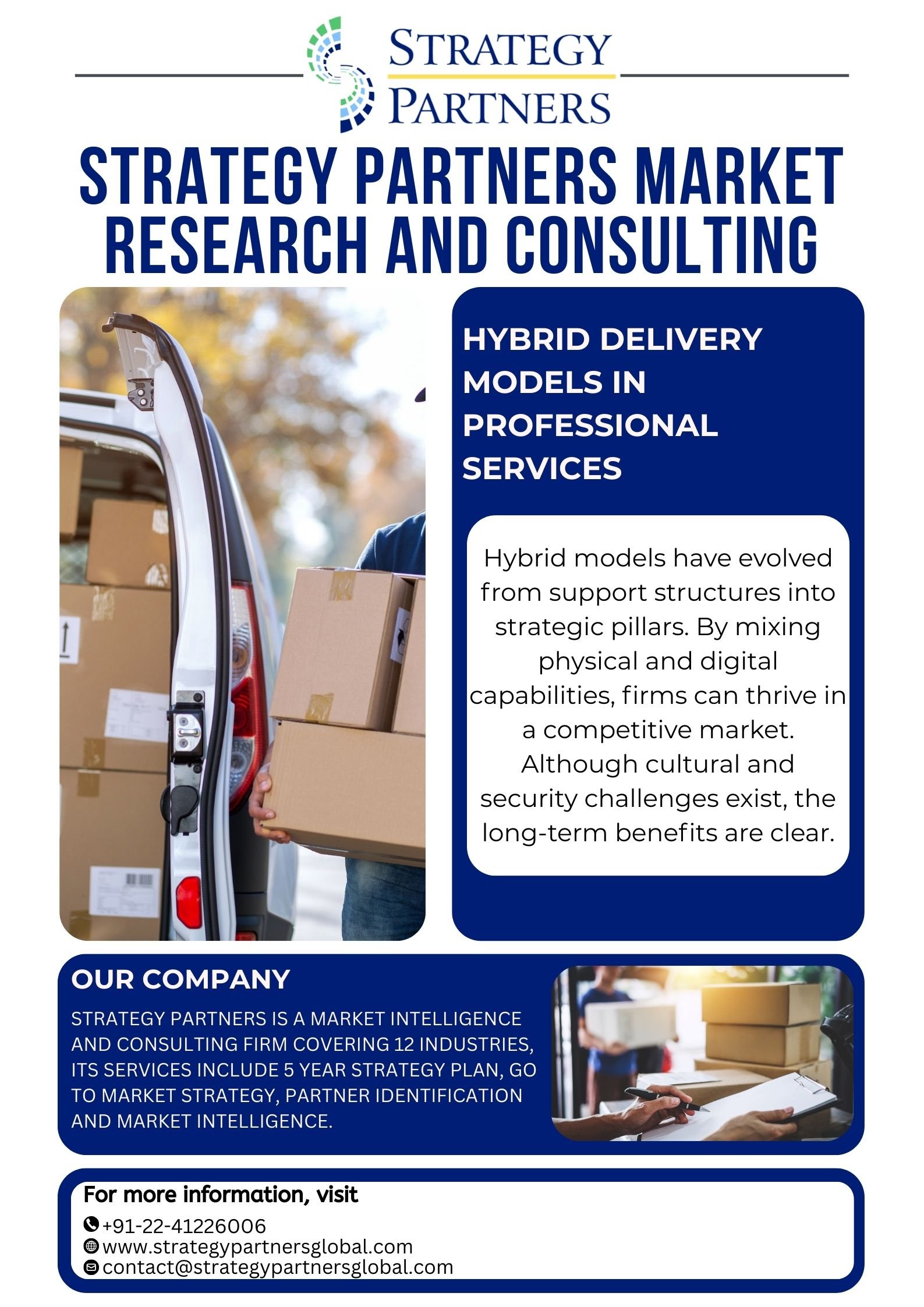
Hybrid models have evolved from support structures into strategic pillars. By mixing physical and digital capabilities, firms can thrive in a competitive market. Although cultural and security challenges exist, the long-term benefits are clear. Ultimately, firms that refine their frameworks and leverage new technology will lead the future of professional services.