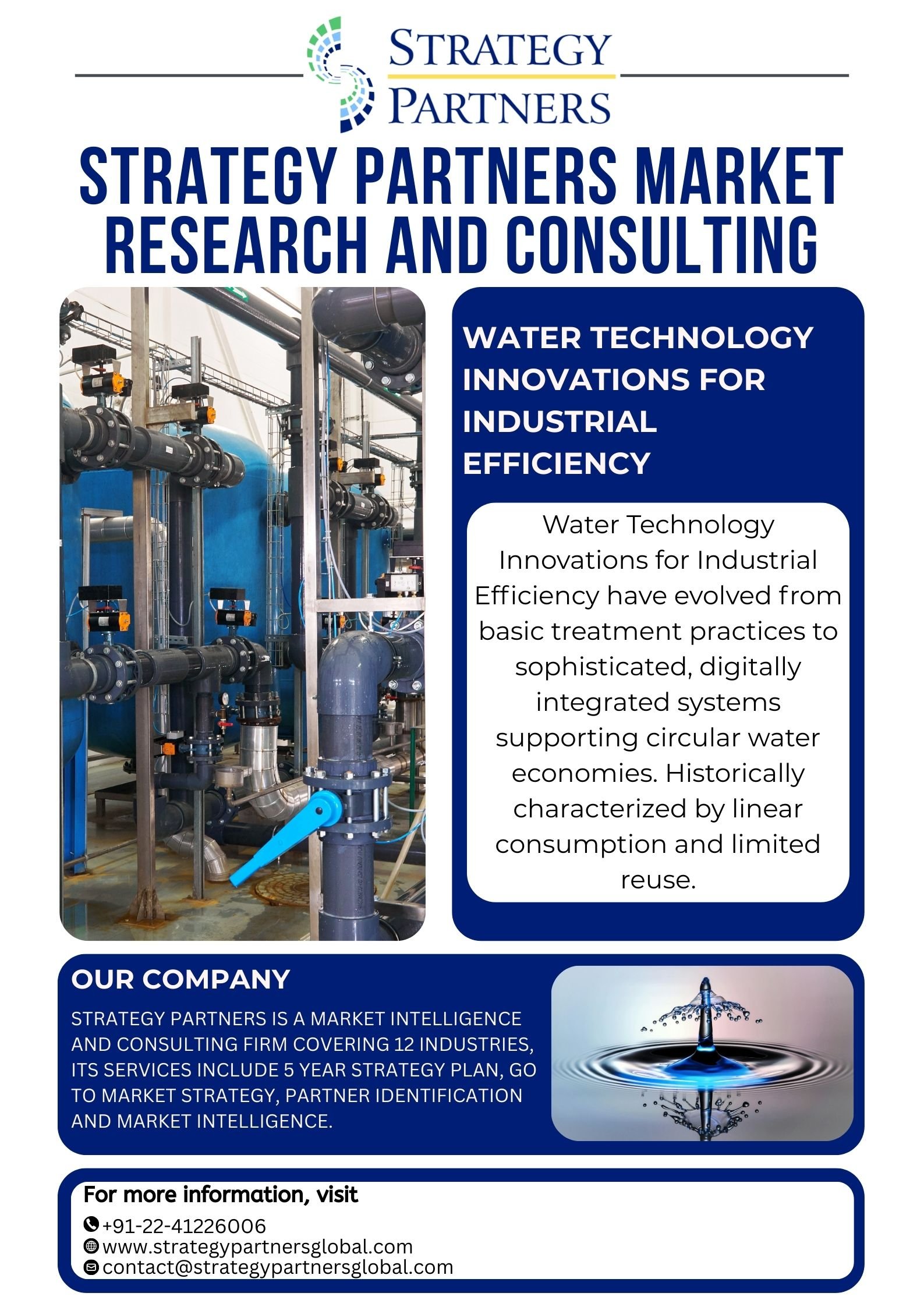
Water Technology Innovations for Industrial Efficiency
Water technology is now crucial for industries. Today, factories around the world face huge pressure. They must use resources better, cut costs, and follow strict environmental rules.
Introduction
People used to see water just as a basic utility. Now, they treat it as a strategic resource. Factories use it for manufacturing, energy, chemicals, food processing, mining, and medicine. As freshwater becomes scarce, companies deploy advanced treatment, recycling, and monitoring tools. Consequently, they ensure sustainable growth.
Governments push industrial facilities to use less water. They also expect them to improve efficiency and lower their environmental impact. Fortunately, companies achieve better results using digital monitoring, advanced filtration, and desalination. For instance, leaders like Veolia and SUEZ drive global industrial water management. Meanwhile, tech providers like Xylem create smart water systems and analytics. Therefore, water tech innovation is now a core part of modern industry. It supports both the environment and long-term savings.
Past Water Technology Innovations
In the past, industries simply used water and threw it away. They extracted it, used it, and discharged it with very little treatment. Workers widely used basic mechanical filtration and settling tanks. However, companies rarely built complete wastewater recovery systems. Furthermore, production mattered more than the environment, and governments had fewer rules.
Decades ago, factories relied on basic sand filters, chemicals, and chlorine. These methods provided basic cleaning. Yet, they could not remove complex chemicals from oil refining or heavy metal processing. As a result, factories lost a lot of water and heavily polluted the environment.
Water-scarce regions used thermal desalination. However, this required too much energy. Companies like Dow Chemical helped create early membranes. Even so, reverse osmosis (RO) systems were too expensive at first. Usually, only wealthy industries reused water. Also, factories lacked digital monitoring and real-time data. Workers had to optimize processes by hand. Consequently, industries wasted water, ignored leaks, and struggled with dirty wastewater.
Present Water Technology Innovations
Today, industrial water management looks completely different. Companies embrace circular water models. They treat, reuse, and recycle water right on the factory floor.
Engineers deploy advanced membrane filters, including reverse osmosis (RO) and ultrafiltration (UF). These tools easily remove tiny contaminants. Furthermore, companies integrate digital tools into their water systems. They use smart sensors, the Internet of Things (IoT), and data analytics. These devices track water quality, find leaks, and manage flow rates instantly. For example, Ecolab sells smart systems that help clients track usage and save water.
Many sectors, like textiles and power generation, now use Zero Liquid Discharge (ZLD) systems. These systems ensure factories release zero wastewater into the environment. Additionally, heavy industries use advanced cooling tech to stop evaporation and save heat.
Desalination is also much better now. Engineers use improved materials and energy-saving devices. In dry places like the Middle East, factories rely on RO desalination to guarantee their water supply. Finally, automation runs these plants to reduce human error and keep water quality high. Moreover, industries now see wastewater as a valuable resource. They recover nutrients, make biogas from sludge, and reclaim water for reuse. Consequently, companies proudly include water saving in their corporate sustainability reports.
Future Water Technology Innovations
Looking ahead, new materials, artificial intelligence (AI), and local treatment systems will shape the future. First, AI will predict equipment failures and keep treatment plants running smoothly.
Next-generation filters, like graphene and biomimetic membranes, are currently in development. If successful, these inventions will make desalination and filtration much cheaper and faster. Furthermore, local, bite-sized treatment systems will become popular. Remote factories and developing countries will use them to clean water on-site. Therefore, they won’t need massive, centralized water plants. Engineers will also use digital twins to test new ideas safely.
Additionally, the link between water and energy will grow stronger. Solar and wind power will run desalination and treatment plants to cut carbon emissions. Factories will also share water. For instance, one factory will treat its wastewater and send it to a neighbor. Ultimately, stricter laws and climate change will force companies to act fast. Smart water management will help businesses stand out, attract investors, and build trust.
Market Drivers for Water Technology
Several factors push industries to adopt these new technologies:
-
Increasing Water Scarcity: Climate change and growing populations make water scarce. Therefore, industries must recycle.
-
Strict Environmental Rules: Governments demand cleaner wastewater. Thus, factories need advanced treatment.
-
Rising Costs: Buying, cleaning, and dumping water costs more every year. Companies want to save money.
-
Corporate Sustainability: Sustainability targets force companies to invest in water saving.
-
Better Technology: New sensors and filters work better and cost less.
-
Industrial Growth: Rapid growth in Asia and the Middle East creates a massive demand for clean water.
Restraints and Challenges
Despite the growth, the industry faces a few hurdles:
-
High Upfront Costs: Advanced systems and smart sensors cost a lot of money to install.
-
High Energy Use: Desalination and tight filters consume massive amounts of electricity.
-
Complex Upgrades: It is hard to connect new tech to old factory pipes.
-
Need for Experts: Workers need special training to run these complex systems.
-
Poor Infrastructure: Developing countries often lack the basic piping needed for these upgrades.
Additionally, day-to-day operations bring specific challenges:
-
Clogged Filters: Membranes get dirty quickly. Therefore, they need constant cleaning.
-
Cyber Threats: Hackers can attack digital water systems. Companies must protect their data.
-
Low Profits: Industries with tight budgets struggle to justify the cost of new water tech.
-
Confusing Rules: Different countries have different laws, which makes global planning hard.
-
Public Fear: Sometimes, people worry about using recycled wastewater.
Conclusion
In conclusion, industrial water technology has changed dramatically. It started with basic filters and has grown into a smart, digital, circular economy. In the past, factories just used water and dumped it. Now, they focus on saving every drop.
Today, companies rely on advanced membranes, IoT sensors, and zero liquid discharge. Top tech providers make this possible. In the future, AI, new materials, and green energy will transform the industry even more.
Of course, high costs and complex rules still cause problems. However, saving water is now a top priority. As water becomes rarer, innovative technology will keep industries running efficiently and safely.