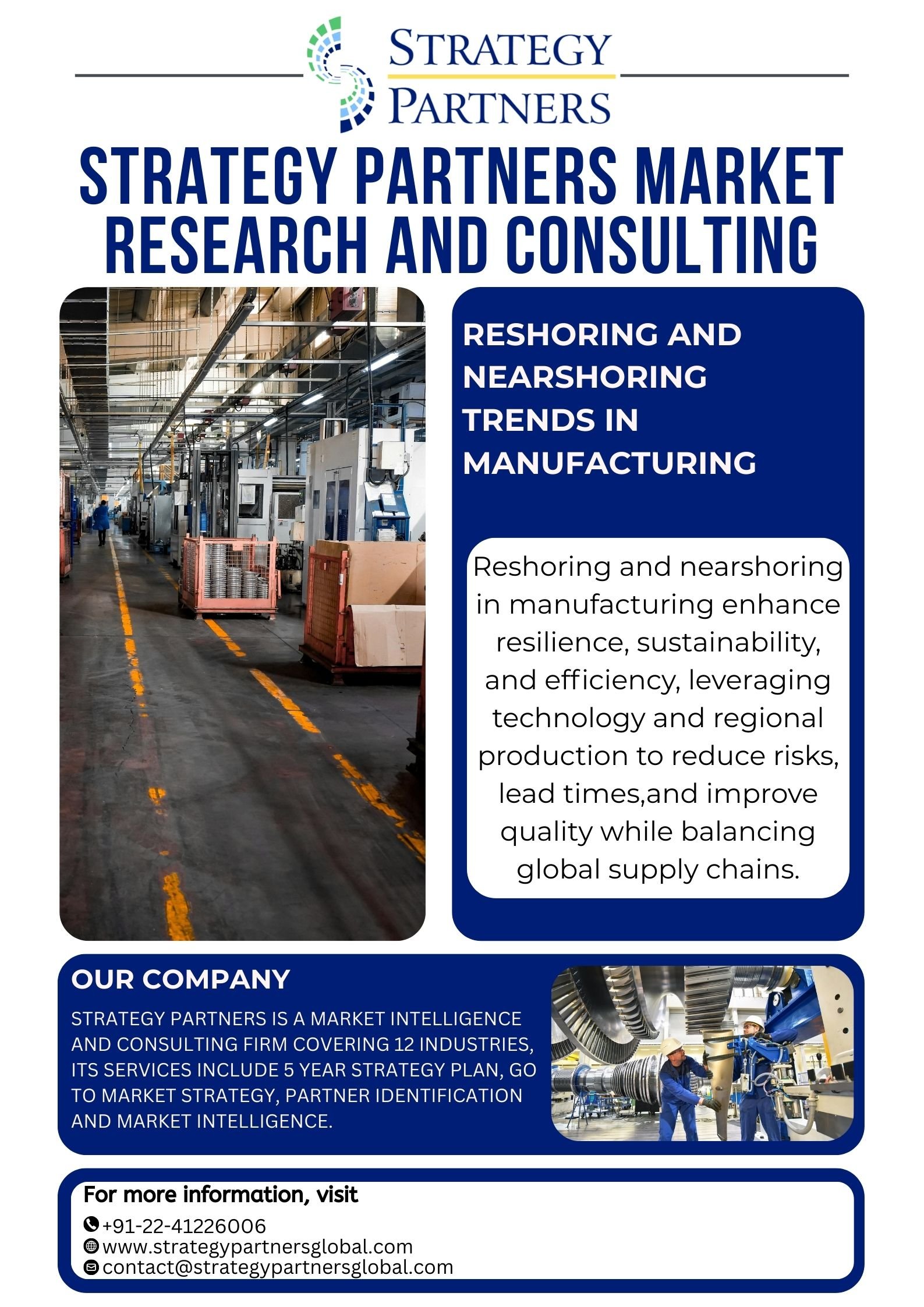
Reshoring and Nearshoring Trends in Manufacturing
Reshoring and nearshoring enhance resilience, sustainability, and efficiency. By using technology and regional production, manufacturers can reduce risks, shorten lead times, and improve quality while balancing global supply chains.
Introduction
Global manufacturing has changed significantly over the last few decades. Originally, globalization and cost savings drove the industry. Consequently, companies moved production to low-cost countries, particularly in Asia, to cut labor expenses. However, the COVID-19 pandemic, geopolitical tension, and rising shipping costs revealed major risks in this approach.
As a result, “reshoring” (returning operations to a home country) and “nearshoring” (moving production closer to end markets) are gaining popularity. These strategies aim to build stronger supply chains and improve quality control. Therefore, reshoring and nearshoring are no longer just about cost. Instead, they are critical for operational safety and global competitiveness.
Historical Trends: A Focus on Cost
Historically, the manufacturing sector preferred offshore outsourcing. During the 1980s and 1990s, companies built facilities in countries with lower labor costs, such as China and India. This model allowed firms to save money and reach new markets. Meanwhile, nearshoring was rare and mostly used to cut shipping costs within specific trade zones.
In the past, reshoring was also uncommon and usually reactive. Companies only returned to domestic markets if foreign labor costs spiked or quality issues arose. Furthermore, these shifts were limited to specific sectors like automotive and electronics. In summary, past strategies focused heavily on cost, ignoring flexibility or sustainability.
Current Landscape: Proactive Strategies
Today, reshoring and nearshoring are proactive strategies. The COVID-19 pandemic exposed the fragility of long supply chains. It demonstrated how a disruption in one region could stop global production. Additionally, trade wars and sanctions have highlighted the need to reduce dependency on distant suppliers.
Modern reshoring often uses advanced technology. For instance, automation and robotics help offset higher domestic labor costs. Similarly, nearshoring allows firms to stay close to customers. This ensures faster delivery and lowers transportation expenses.
Currently, companies also prioritize sustainability. Local production reduces the carbon footprint caused by long-haul shipping. Moreover, many firms now use hybrid models. They make high-value items domestically while manufacturing cheaper goods overseas. This approach balances efficiency with resilience.
Future Outlook: Technology and Agility
Looking ahead, we expect reshoring and nearshoring to accelerate. Manufacturers will use smart factories, artificial intelligence (AI), and robotics to produce goods efficiently near their target markets. Consequently, domestic operations will maintain high quality while adapting quickly to market changes.
Furthermore, companies will diversify their supply chains. They will spread operations across multiple countries to lower risks. They will also prioritize green manufacturing and energy-efficient operations. Ultimately, resilience, agility, and technology will define future strategies.
Market Drivers
Several factors are driving the shift toward local manufacturing:
-
Supply Chain Resilience: Reducing reliance on distant suppliers lowers risks from pandemics or natural disasters.
-
Rising Logistics Costs: High fuel prices and shipping delays make local production more affordable.
-
Geopolitical Uncertainty: Trade wars and tariffs encourage firms to move manufacturing closer to home.
-
Technology: Automation and 3D printing make domestic production financially viable by reducing labor costs.
-
Sustainability: Local production cuts carbon emissions and ensures companies follow environmental laws.
-
Responsiveness: Proximity to consumers allows for faster delivery and better inventory management.
-
Government Incentives: Tax breaks and grants encourage companies to invest in reshoring.
Market Restraints
Despite the benefits, companies face several hurdles:
-
High Initial Investment: Building new facilities requires expensive land, equipment, and training.
-
Labor Costs: Even with automation, domestic wages remain higher than in offshore locations.
-
Infrastructure Gaps: Not all regions have the logistics or industrial parks needed for advanced manufacturing.
-
Implementation Complexity: Installing automation and new technology is difficult and takes time.
-
Market Volatility: Economic fluctuations make long-term investments in local production risky.
Key Challenges
Transitioning to a new model presents specific operational challenges:
-
Supply Chain Reconfiguration: Shifting operations requires redesigning supplier networks and logistics routes.
-
Skill Shortages: Domestic facilities need specialized talent for robotics and digital systems, which is often scarce.
-
Transition Costs: Relocating creates disruption costs and temporary productivity losses.
-
Global Integration: Companies must coordinate new local operations with their existing offshore facilities.
-
Sustainability Compliance: Meeting strict local environmental standards requires careful planning.
Conclusion
Reshoring and nearshoring have become essential strategies in modern manufacturing. They replace the old, reactive model of outsourcing that was driven solely by cost. Today, the industry emphasizes resilience, speed, and sustainability.
Furthermore, automation and smart manufacturing are accelerating this shift. Although companies face challenges like high initial costs and labor shortages, these strategies offer shorter lead times and better control. Ultimately, firms that embrace technology and workforce development will be best positioned to compete globally.