
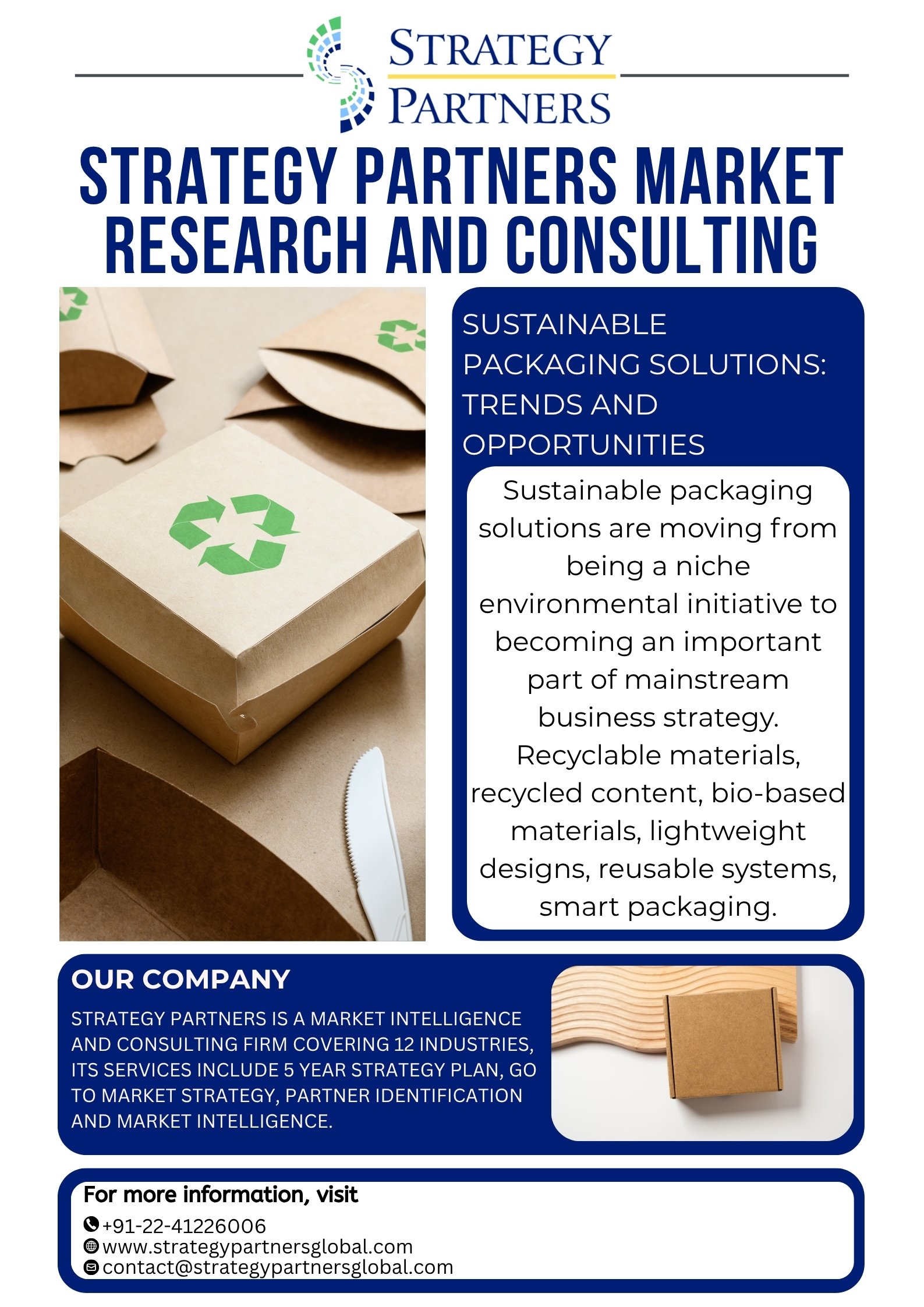
Sustainable packaging is becoming a strategic priority for businesses as environmental concerns, regulatory requirements, and consumer expectations reshape the global packaging industry. Traditional packaging has played an essential role in protecting products, extending shelf life, and enabling efficient transportation, but the growing volume of packaging waste has increased pressure on manufacturers to develop more environmentally responsible alternatives.
Sustainable packaging solutions aim to reduce the environmental impact of packaging throughout its lifecycle, from raw material sourcing and manufacturing to transportation, use, recycling, and disposal. These solutions include recyclable materials, biodegradable packaging, compostable products, reusable packaging systems, lightweight designs, and packaging made from renewable resources.
The shift toward sustainable packaging is not limited to consumer goods. Industries such as food and beverages, pharmaceuticals, cosmetics, personal care, electronics, e-commerce, automotive components, and industrial products are increasingly exploring environmentally responsible packaging options. As a result, sustainability is becoming an important driver of innovation and investment across the packaging value chain.
What Is Sustainable Packaging?
Sustainable packaging refers to packaging designed to provide product protection and functionality while minimizing environmental impact. Unlike conventional packaging, which may rely heavily on virgin plastics and other resource-intensive materials, sustainable packaging focuses on efficient material use, recyclability, renewable resources, and improved end-of-life management.
One of the key principles of sustainable packaging is reducing material consumption without compromising product protection. Lightweight packaging can reduce the amount of raw material required and lower transportation-related emissions because lighter products require less energy to move.
Recyclability is another important element. Packaging designed for recycling can help recover valuable materials and reduce dependence on virgin resources. Paper, cardboard, glass, metals, and certain plastics can be incorporated into circular material systems when appropriate collection and recycling infrastructure is available.
Biodegradable and compostable materials are also gaining attention. These materials can offer alternatives for selected applications where traditional packaging creates significant waste-management challenges. However, their environmental benefits depend on factors such as material composition, local waste infrastructure, disposal conditions, and the overall lifecycle of the package.
Reusable packaging represents another approach. Instead of using packaging once and discarding it, reusable systems allow containers or transport packaging to be collected, cleaned, and used multiple times. This model is particularly relevant for logistics, food delivery, retail, and industrial supply chains.
Key Trends Shaping Sustainable Packaging
One of the strongest trends in sustainable packaging is the transition toward recyclable and recycled-content materials. Packaging manufacturers are increasingly incorporating post-consumer recycled materials into products, helping create demand for recovered materials and supporting circular economies.
Paper-based packaging is also expanding into applications traditionally dominated by plastics. Advances in coatings, barrier technologies, forming processes, and fiber-based materials are enabling paper and molded-fiber packaging to provide improved moisture, grease, and oxygen resistance. These developments are particularly relevant to food, beverage, cosmetics, and consumer-product applications.
Bio-based packaging is another emerging area. Materials derived from renewable feedstocks such as agricultural resources, cellulose, starches, and other biological sources can reduce reliance on fossil-based raw materials. Research into bio-based polymers and advanced fiber materials is creating new possibilities for flexible films, containers, coatings, and protective packaging.
Another major trend is packaging reduction. Companies are redesigning packages to use fewer materials while maintaining strength and product protection. Concentrated products, refill systems, smaller packaging formats, and optimized product-to-package ratios can contribute to material savings.
The growth of e-commerce is also influencing sustainable packaging innovation. The rapid expansion of online shopping has increased demand for protective packaging, creating opportunities for right-sized boxes, recyclable mailers, molded fiber protection, reusable shipping containers, and packaging designs that reduce empty space.
Digital technologies are contributing to this transformation as well. Smart packaging can incorporate QR codes, digital labels, sensors, and tracking technologies to provide information about product origin, recycling instructions, supply chains, and consumer engagement. These technologies can improve traceability while supporting more informed recycling and reuse practices.
Opportunities Across the Packaging Value Chain
The transition toward sustainable packaging creates opportunities for raw-material producers, packaging manufacturers, technology providers, recyclers, consumer brands, and logistics companies.
Material innovation is one of the largest opportunity areas. Companies developing high-performance recyclable polymers, bio-based materials, advanced paper solutions, compostable materials, coatings, adhesives, and barrier films can address demand for packaging that combines sustainability with performance.
Packaging machinery manufacturers also have opportunities to develop equipment capable of processing new materials and producing lightweight or recyclable formats. Sustainable packaging may require modifications to filling, sealing, forming, printing, and labeling processes, creating demand for flexible manufacturing technologies.
Recycling and waste-management infrastructure represents another significant opportunity. Better collection, sorting, washing, processing, and recycling technologies are essential to achieving higher material recovery rates. Advanced sorting systems, automation, artificial intelligence, and improved recycling processes could help increase the value of packaging waste.
Businesses can also develop new models based on reuse and refill. Reusable containers, deposit-return systems, refill stations, and closed-loop logistics networks can create new revenue opportunities while reducing single-use packaging.
For consumer brands, sustainable packaging can contribute to brand differentiation. Consumers increasingly pay attention to packaging materials, recyclability, waste reduction, and environmental claims. Companies that combine credible sustainability initiatives with convenient and attractive packaging can strengthen customer engagement.
Challenges in Sustainable Packaging Adoption
Despite its potential, sustainable packaging faces several challenges. One of the biggest is the balance between environmental performance and product protection. Packaging must protect products from damage, contamination, moisture, oxygen, light, and other external factors. If sustainable packaging reduces product shelf life or increases product damage, its overall environmental benefit may be reduced.
Cost is another important consideration. Sustainable materials, recycled content, advanced coatings, and new manufacturing processes can sometimes be more expensive than established packaging solutions. Companies therefore need to evaluate sustainability alongside economics, performance, and supply-chain availability.
Recycling infrastructure is also uneven across regions. A package may technically be recyclable but still end up in landfill if suitable collection and processing systems are unavailable. This highlights the importance of designing packaging around real-world recycling systems rather than relying solely on material characteristics.
Another challenge is the risk of misleading environmental claims. Companies need credible data and transparent lifecycle assessments to demonstrate the actual environmental benefits of packaging solutions. Clear communication can help prevent greenwashing and build consumer trust.
Future Outlook
The future of sustainable packaging will be shaped by the convergence of material science, circular-economy principles, digital technologies, automation, and changing consumer expectations. Packaging companies are likely to focus increasingly on solutions that combine functionality, affordability, recyclability, and lower environmental impact.
Circular packaging systems are expected to gain importance as businesses move beyond simply replacing one material with another. Designing packaging for reuse, recycling, recovery, and efficient resource utilization can provide a more comprehensive approach to sustainability.
Artificial intelligence and automation may further improve packaging design, material optimization, quality control, sorting, and recycling. Digital tools can help manufacturers analyze packaging performance and identify opportunities to reduce material consumption and waste.
Regulatory developments will also remain an important market driver. Governments and industry organizations around the world are introducing measures focused on packaging waste, recycled content, recyclability, extended producer responsibility, and circular material use. Companies that prepare early for these changes can potentially gain a competitive advantage.
Conclusion
Sustainable packaging solutions are moving from being a niche environmental initiative to becoming an important part of mainstream business strategy. Recyclable materials, recycled content, bio-based materials, lightweight designs, reusable systems, smart packaging, and improved recycling technologies are creating new opportunities across the packaging ecosystem.
The most successful solutions will need to deliver more than environmental benefits. They must provide product protection, cost efficiency, convenience, scalability, and compatibility with existing supply chains and waste-management systems.
As businesses, consumers, and governments place greater emphasis on resource efficiency and waste reduction, sustainable packaging is positioned for continued innovation and investment. Companies that can develop practical, scalable, and measurable packaging solutions will be well positioned to participate in the next generation of the global packaging industry.