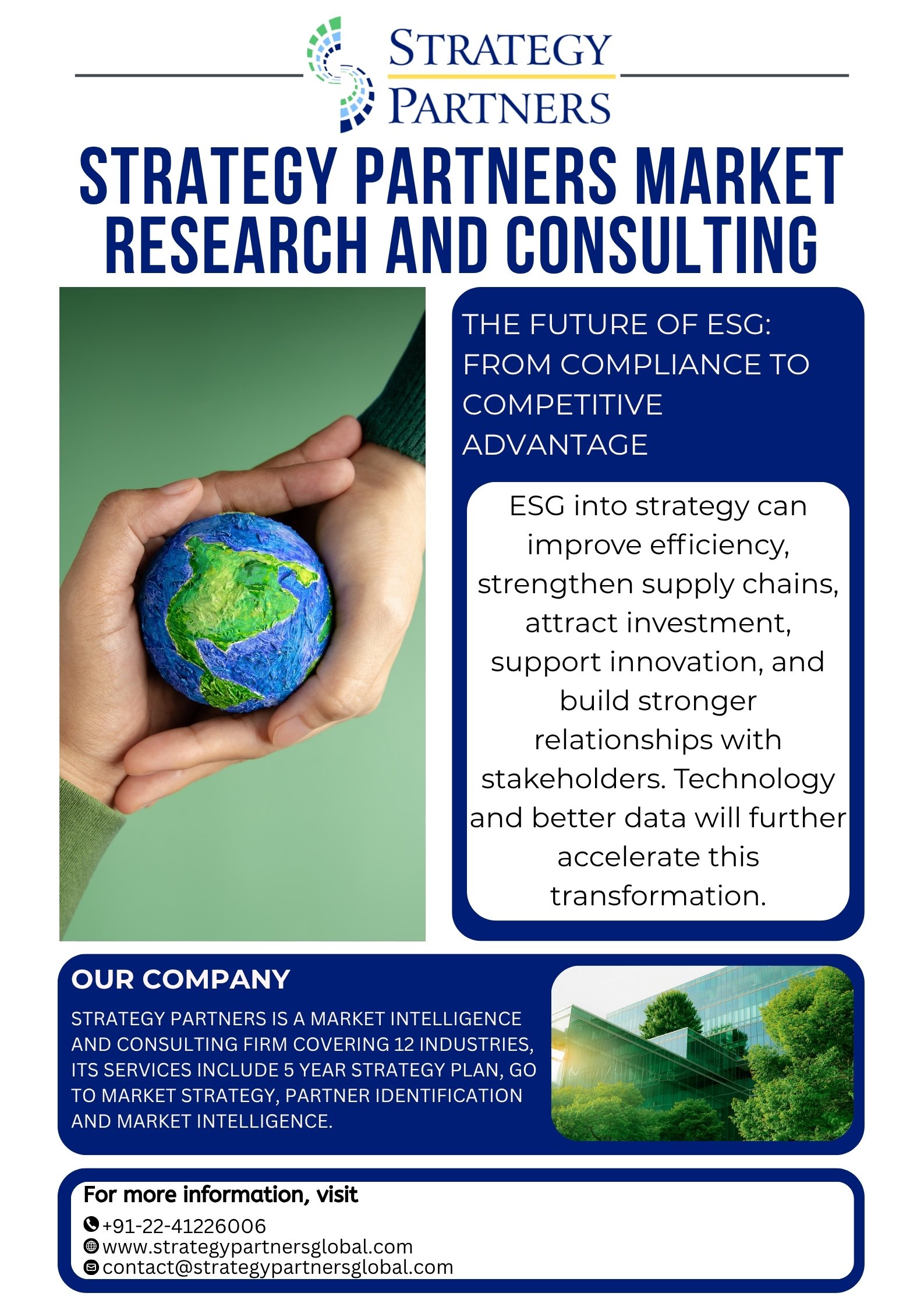
Environmental, Social, and Governance (ESG) has evolved from a reporting requirement into a strategic priority for businesses worldwide. Companies once viewed ESG mainly as a compliance exercise focused on disclosures, sustainability reports, and regulatory requirements. Today, organizations increasingly recognize ESG as a way to improve operational efficiency, strengthen resilience, attract investment, and create long-term business value.
The future of ESG will move beyond simply measuring environmental and social performance. Companies will increasingly integrate ESG principles into corporate strategy, investment decisions, supply chains, product development, risk management, and customer engagement. Organizations that treat ESG as a source of innovation and competitive differentiation may gain an advantage over businesses that approach it only as a regulatory obligation.
From Compliance to Business Strategy
ESG initially gained attention as investors, regulators, customers, and employees demanded greater transparency from companies. Businesses responded by developing sustainability reports and tracking indicators such as greenhouse gas emissions, energy consumption, workforce diversity, and corporate governance practices.
However, reporting alone does not necessarily create business value. The next phase of ESG will focus on connecting sustainability performance with financial and operational outcomes.
Companies may increasingly ask how reducing energy consumption can lower operating costs, how responsible sourcing can reduce supply-chain risks, and how sustainable products can open new markets. This shift transforms ESG from a reporting function into a strategic business tool.
Organizations that successfully integrate ESG into their core strategies can identify opportunities before competitors and respond more effectively to changing market conditions.
ESG and Competitive Advantage
ESG can create competitive advantage through several business channels. One of the most direct is operational efficiency. Energy-efficient facilities, reduced material waste, water conservation, and optimized logistics can lower costs while improving environmental performance.
Sustainability can also support product innovation. Growing demand for low-carbon materials, energy-efficient technologies, recyclable packaging, and responsible products is encouraging companies to rethink their product portfolios.
Strong ESG performance can also strengthen relationships with customers and business partners. Large organizations increasingly assess suppliers based on environmental and social criteria. Companies with credible ESG programs may therefore be better positioned to participate in global supply chains.
Access to capital is another important factor. Investors and financial institutions increasingly evaluate sustainability-related risks and opportunities when assessing companies. Businesses that demonstrate effective ESG management may be better positioned to attract long-term investment.
The Growing Role of Climate Action
Environmental performance will remain one of the most important components of ESG. Climate change is creating physical and financial risks for businesses across industries.
Companies are therefore assessing their greenhouse gas emissions, energy consumption, climate exposure, and transition risks. Many organizations are also developing decarbonization strategies that include renewable energy, energy efficiency, electrification, low-carbon materials, and improved supply-chain management.
The future will place greater emphasis on measurable outcomes rather than broad sustainability commitments. Companies will need credible data to demonstrate whether their climate strategies are producing meaningful improvements.
Carbon accounting and emissions monitoring technologies can support this transition by helping organizations measure emissions across operations and supply chains. Better data can also help businesses identify the areas where climate action can produce the greatest financial and environmental benefits.
Technology Will Transform ESG
Technology is becoming an important enabler of ESG management. Artificial intelligence, cloud computing, Internet of Things devices, satellite monitoring, blockchain, and advanced analytics can improve the collection and analysis of sustainability data.
AI can help companies identify patterns in energy use, optimize production processes, forecast environmental risks, and analyze large volumes of ESG information. IoT sensors can provide real-time data on energy consumption, water use, equipment performance, and emissions.
Digital platforms can also improve ESG reporting by connecting information from different departments and facilities. This can reduce manual data collection and improve transparency.
As technology advances, ESG management may become more continuous and data-driven rather than an annual reporting exercise.
Supply Chain Sustainability
Supply chains will become increasingly important to ESG strategies. For many companies, a significant share of environmental and social impacts occurs outside their direct operations.
Businesses are therefore paying greater attention to supplier emissions, labor practices, resource use, human rights, and responsible sourcing.
Future ESG strategies will likely involve deeper collaboration between companies and suppliers. Organizations may use digital tools to monitor supplier performance, identify risks, and improve traceability.
Companies that build resilient and transparent supply chains can potentially reduce disruption risks while strengthening their sustainability performance.
Social and Governance Factors
Although environmental issues often dominate ESG discussions, social and governance factors will remain essential to long-term competitiveness.
Social performance includes employee well-being, workplace safety, diversity, inclusion, skills development, human rights, and community relationships. Companies that invest in their workforce can improve employee engagement, productivity, and talent retention.
Governance provides the foundation for credible ESG performance. Strong boards, transparent decision-making, ethical business practices, effective risk management, and accountability help ensure that sustainability commitments are implemented effectively.
Poor governance can undermine environmental and social initiatives. Therefore, companies will increasingly treat ESG as an integrated framework rather than three completely separate areas.
ESG Data and Transparency
One of the biggest changes ahead will be the growing importance of high-quality ESG data. Investors, regulators, customers, and business partners increasingly want comparable and reliable information.
Companies will need stronger internal systems to collect, verify, and manage ESG data. Data quality will become particularly important as sustainability disclosures face greater scrutiny.
Organizations that can demonstrate measurable progress may build greater trust with stakeholders. At the same time, companies should avoid unsupported sustainability claims, as inaccurate or exaggerated claims can damage reputation and create regulatory risks.
The future of ESG will therefore depend not only on what companies achieve but also on how effectively they measure and communicate those achievements.
Turning ESG Into Innovation
The strongest competitive advantage may come from using ESG challenges to drive innovation.
Companies can develop new technologies, products, and business models that address environmental and social challenges. Renewable energy solutions, circular economy models, sustainable materials, low-carbon manufacturing, and resource-efficient technologies are examples of areas where sustainability and commercial opportunity can overlap.
ESG can also encourage companies to rethink traditional business models. Instead of focusing only on selling products, businesses may explore repair services, product-as-a-service models, recycling programs, and resource-sharing platforms.
This approach can create new revenue streams while reducing resource consumption.
Challenges Ahead
Despite its potential, ESG faces several challenges. Regulatory requirements continue to evolve across different markets, making compliance complex for multinational businesses.
Companies may also struggle with inconsistent data, supply-chain transparency, high implementation costs, and limited internal expertise. Smaller businesses may face particular difficulties because they often have fewer resources for ESG measurement and reporting.
Another challenge is maintaining credibility. ESG strategies must be supported by measurable actions rather than marketing claims. Companies that fail to demonstrate real progress could face reputational and financial consequences.
Successful organizations will need to balance ambition with practical implementation and establish clear priorities based on material business risks and opportunities.
The Future Outlook
The future of ESG will be defined by integration. Sustainability will increasingly become part of mainstream corporate decision-making rather than remaining a separate function.
Boards and executives will consider ESG factors when evaluating investments, entering new markets, selecting suppliers, developing products, and managing risks. Technology will make ESG measurement more efficient, while better data will improve transparency and accountability.
Companies will also increasingly connect ESG targets with financial performance. This could make sustainability a core component of business planning rather than a standalone corporate responsibility initiative.
The organizations that benefit most will likely be those that identify ESG challenges early and convert them into opportunities for efficiency, innovation, resilience, and growth.
Conclusion
ESG is moving beyond compliance. Its future lies in creating measurable business value while addressing environmental, social, and governance challenges.
Companies that integrate ESG into strategy can improve efficiency, strengthen supply chains, attract investment, support innovation, and build stronger relationships with stakeholders. Technology and better data will further accelerate this transformation.
The next generation of ESG leaders will not simply ask whether their company meets sustainability requirements. They will ask how ESG can help the business become more resilient, innovative, trusted, and competitive.